Silent Epidemic: Domestic Violence

When we hear traumatic brain injury, we often think of a trauma from say….a vehicle accident, or sports, or falls.

It’s time to continue bringing awareness to this silent epidemic…Domestic Violence.

*Polytrauma and Traumatic Brain Injuries are common with Domestic Violence

* Women experience about 4.8 million intimate partner-related physical assaults and rapes every year.

*Less than 20 percent of battered women sought medical treatment following an injury. A significant number of crimes are never even reported for reasons that include the victim’s feeling that nothing can/will be done and the personal nature of the incident.

*The cost of experiencing Domestic Violence includes medical care, mental health services, and lost productivity

*Domestic Violence affecting LGBT individuals continues to be grossly underreported; it is as much as a problem within LGBT communities as it is among heterosexual ones.
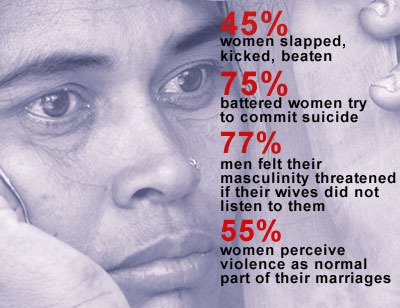
Domestic violence, also known as intimate partner violence, is a pattern of abusive behavior in any relationship that is used by one partner to gain or maintain power and control over another intimate partner. Domestic violence can be physical, sexual, emotional, economic, or psychological actions or threats of actions that influence another person[1]

Research on abused women shows that between 40 to 92 percent of victims of domestic violence suffer physical injuries to the head; nearly half of these women report that they have experienced strangulation, according to research published in October 2017 in the Journal of Women’s Health.

DID YOU KNOW?

More than 40 per cent of victims of domestic violence are male.

40% of those reporting serious assaults by current or former partners in the past year were men, and most of their attackers were women.

80 per cent increase in reports from male victims between 2012 and 2016.

Women are as likely as men to be agressors.

Men also make up about 30% of intimate homicide victims, not counting confirmed cases of female self-defense.

Female-on-male violence is often assumed to be harmless, given sex differences in size and strength. Yet women may use weapons — including knives, glass, boiling water and various household objects — while men may be held back from defending themselves by cultural taboos against harming woman

Domestic violence against men can take many forms, including emotional, sexual and physical abuse and threats of abuse. It can happen in heterosexual or same-sex relationships.

Abusive relationships always involve an imbalance of power and control. An abuser uses intimidating, hurtful words and behaviors to control his or her partner.

Men who find themselves as victims of domestic violence are often viewed by and made to feel emasculated and weak. We are told to fight back and ridiculed for “accepting” or “allowing” the abuse. Many people don’t know how to approach the conversation for fear of adding insult to literal injury, or because they simply don’t believe a man can be a victim of domestic violence.

Men are expected to be violent and in control, particularly in control of women, while supressing their emotions and sucking it up whenever life doesn’t go their way. When a man steps outside of this box, he is often ridiculed as weak or as not being a “real” man.
This toxic view of masculinity often leads men to become perpetrators of domestic violence, but when they’re victims, it can prevent them from coming forward. The stigma, and the fear of not being believed, can be so strong that men simply don’t report the abuse.

Abused men have faced widespread biases from police, judges and social workers. Equality should include recognizing women’s potential for abusive behavior.

Claims on both sides should be fairly investigated — without political bias, sexist bias, or cultural bias.

Domestic violence service providers. Screen everyone who seeks DV services for TBI. A brief screening tool that was designed to be used by professionals who are not TBI experts is the HELPS.2
HELPS is an acronym for the most important questions to ask:
H = Were you hit in the head?
E = Did you seek emergency room treatment?
L = Did you lose consciousness? (Not everyone who suffers a TBI loses consciousness.)
P = Are you having problems with concentration and memory?
S = Did you experience sickness or other physical problems following the injury?
If you suspect a victim has a brain injury, or she answers “yes” to any of these questions, help her get an evaluation by a medical or neuropsychological professional – especially if she has suffered repeated brain injuries, which may decrease her ability to recover and increase her/his risk of death.
https://www.biav.net/traumatic-brain-injury-domestic-violence/

http://www.opdv.ny.gov/professionals/tbi/dvandtbi_infoguide.html

Printable version of Traumatic Brain Injury and Domestic Violence Quick Guide

Click to access Domestic-Violence-Fact-Sheet-lb.pdf

https://ncadv.org/statistics

Violence Against Women in the United States: Statistics

https://www.everydayhealth.com/neurology/shining-light-on-traumatic-brain-injury-domestic-violence/

https://www.npr.org/sections/health-shots/2018/05/30/613779769/domestic-violence-s-untold-damage-concussion-and-brain-injury

https://www.helpguide.org/articles/abuse/help-for-men-who-are-being-abused.htm

https://melmagazine.com/what-domestic-violence-against-men-looks-like-74ce9500ab8d

https://www.independent.co.uk/voices/domestic-violence-male-victims-shelters-government-funding-stigma-a7626741.html

https://www.mayoclinic.org/healthy-lifestyle/adult-health/in-depth/domestic-violence-against-men/art-20045149

http://www.latimes.com/opinion/op-ed/la-oe-young-sorenson-male-domestic-abuse-20180222-story.html

https://pro.psychcentral.com/exhausted-woman/2018/01/males-can-be-the-victims-of-domestic-violence-too/

Newer Brain Imaging Technology

Medical imaging is an important part of assessing the severity of head injuries, but a new device could help medical providers in emergency situations detect structural damage to the brain even before you reach a CT scanner.
The FDA approved BrainScope’s Ahead 100, in 2014, a device that patients wear on their heads – like a hat – that can produce an electroencephalogram of the brain’s structure.
May 18, 2015 BrainScope Company,
Inc. announced that the United States Food and Drug Administration (FDA) has cleared the company’s “Ahead 200” device. Using commercial smartphone hardware that leverages Google’s Android operating system, the Ahead 200 records and analyzes a patient’s electroencephalograph (EEG) using a custom sensor attached to the handheld to provide an interpretation of the structural condition of the patient’s brain after head injury.
It is indicated for use as an adjunct to standard clinical practice to aid in the evaluation of patients who are being considered for a head Computerized Tomography (CT) scan, but should not be used as a substitute for a CT scan. It is to be used on patients who sustained a closed head injury within 24 hours, clinically present as a mild traumatic brain injury (TBI), and are between the ages of 18-80 years.
In September 2016 Brainscope announced clearance by FDA for its latest device, the Ahead 300. This the first of the company’s products that will actually be distributed commercially and it was touted as their most advanced version. It utilizes disposable electrodes and a connected smartphone to process the information. It relies on the firm’s proprietary algorithms and machine learning to spot certain patterns and correlations within the recorded brainwaves.
http://brainscope.com/
(compiled from various sources)

Biomarkers – Blood Work for TBI

biomarkers-can-reveal-tramautic-brain-injury-293810

Scientists are looking to biomarkers, or biological indicators, in the blood to help them differentiate between brain injuries of different severities. For example, there may be an increase of a specific biomarker in the blood of a patient with a severe injury that wouldn’t be present in a patient with a mild injury. When doctors are better able to determine the severity of an injury, they can make sure patients get the right care at the right time, and that could make a big improvement in their prognoses.

Some of the biomarkers used are the following:

•Known as Banyan BTI (Brain Trauma Indicator), the new test measures levels of two protein biomarkers — ubiquitin carboxy-terminal hydrolase-L1 and glial fibrillary acidic protein — that are released from the brain into blood within 12 hours of head injury.

The Brain Trauma Indicator blood test the levels of two proteins, UCH-L1 and GFAP. Upon brain injury, these proteins are released from the brain into the blood. If found at elevated levels, brain damage, with intracranial lesions, normally otherwise only visible on a CT scan, is suggested. Levels of these blood proteins after mTBI can help predict which patients may have intracranial lesions visible by CT scan and which won’t.

To give approval, FDA used data from a clinical study of 1,947 individual blood samples from adults with suspected TBI and compared blood test results with CT scan results. How did the blood test perform? It was able to predict the presence of intracranial lesions on a CT scan 97.5 percent of the time and those who did not have intracranial lesions on a CT scan 99.6 percent of the time.

•Levels of one protein, called brain-derived neurotrophic factor (BDNF), taken within 24 hours of someone’s head injury, could predict the severity of a TBI and how a patient would fare, they found.

While healthy people averaged 60 nanograms per milliliter of BDNF in their bloodstreams, patients with brain injuries had less than one-third of that amount, averaging less than 20 nanograms per milliliter, and those with the most severe TBIs had even lower levels, around 4 nanograms per milliliter. Moreover, patients with high levels of BDNF had mostly recovered from their injuries six months later. But in patients with the lowest levels of BDNF, symptoms still lingered at follow-up. The results suggest that a test for BDNF levels, administered in the emergency room, could help stratify patients.

•Tau protein (MAPT) possible biomarker for traumatic brain injury . The formation and accumulation of misfolded protein aggregates composed of amyloid-beta (Aβ) and tau. APT is a neuronal protein that plays an important role in axonal stabilization, neuronal development, and neuronal polarity. MAPT release into the CSF and blood has been interpreted as indicative of axonal injury.

It is believed that this biomarker may prove helpful in identifying high-risk patients with mTBI. However, additional studies are needed to establish the diagnostic value of serum tau in detecting traumatic brain injury in patients with mTBI.

(all information compiled from various sources)

Your Life Is the Miracle

I am grateful for so much.  The opportunities that life continues to give us to be together and grow as a family and as individuals.Miracleyouare

The last four years since the wreck have been crazy, intense, horrible, disappointing, amazing and life changing. We have had high highs and low lows.  There were times we didn’t know how we would make it to the next day, next week, or next month.

What we miss seeing at times is that we are all just passing time and occupy our chairs very briefly. We never know when that time will be altered. The time I have been given with my family is a gift.  We can let our experiences make us bitter or better.  We can be caught up in the darkness of our experiences or be guided by the light of strength, perseverance, and embrace the little miracles of the recovery process.

Some say we have had more than our share of loss. I see God’s light in my family every day. I may not understand the loss, pain, triumphs, and blessings – however I trust in the plan that is laid out for us and endeavor to accomplish as much as I can to live up to the gift I have been given by the miracle and grace of having survived so much.

lifemiracle