Patient Spotlight – The Scapula Institute

scapulaanatomy
What a normal scapula should look like when not fractured or damaged.
So I have been very fortunate to have survived many rare injuries from the wreck. My journey continues with a new life plan and growing gratitude.
 
I am also fortunate to have my patient story spotlight featured in the 2nd Volume of “The Scapula Institute’s Newsletter”
fractured scapula
Scapula before plated – dark areas in center of scapula are broken and or missing bone
 
Take a moment to read and share this with as many people as you can. The more we can bring awareness to Polytrauma and the amazing medical breakthrough outreach that the Scapula Institute does, the more lives can be impacted and saved.
 
Many thanks to Dr. Peter Cole and his trauma team for all of their efforts on the behalf of bettering the world one patient at a time.
 
 
platingribandscapulajune2016
View from Back – Right Side Plated
rearviewplatingjune2016
After Reconstructive Surgery of Ribs and Scapula
;;

Beautifully Broken

Sometimes feeling broken goes beyond the obvious physical fractures sustained by a physical injury.

Sometimes the scars that are left behind are not even visible to the eyes. Jagged streaks of struggle with each swell of effort and perseverance.

The only way to effectively deal with your past, your limitations, and experiences is to make a future out of it.

No matter if your scars are visible or invisible – have no shame – you are beautifully broken and worthy of healing and love.

Listen: https://t.co/0rFM3S3oSf

#hope_tbi #beautifullybroken

My Spouse As My Caregiver – Web Page Release

The spouse is often forgotten.  Their role as caregiver is not fully appreciated by those not experiencing it. It is easy for folks outside of the experience to forget Rick in all this too as he is healing along with me – he is BRAVE and the most amazing husband and father in the world.

Let’s give a shout out to our Caregivers, the warriors and the silent walking wounded.

Check it out on our newly added Web Page:

My Spouse As My Caregiver

Titanium Rib Plating Shortens Recovery

This is the same type of rip plating I had done when I had flail chest. It was a lifesaver for me.
 
Read more about my rib plating here Flail Chest and Rib Plating

A Heap of Sleep After Trauma

For the first several months after my TBI you couldn’t have paid me to stay awake.  I was always sleeping – in between bouts of pain of course.  However, I just could not seem to stay awake.  I would think to myself, “Stay awake Caren”.  Just couldn’t manage to do it, no matter how hard I tried.

2014hospitalI didn’t care where I was either.  Sitting in the wheelchair, at a doctor appointment, during therapy, on the toilet, in the shower, trying to read, while eating, while drinking, while talking, typing on my computer, home or away I was constantly falling asleep.

Not only was I sleeping 12 hours or more a day I was also 2014NeuroRehabembarking on several “mini naps”.  I attended 3 sleep studies in the first 18 months after the wreck.  I eventually was diagnosed with Hypersomnia vs Narcolepsy.  There was no history of Narcolepsy in my family or with me.   Finally it was determined that this Hypersomnia was a result of my TBI.  This was a fatigue so intense that simply waking up and having help getting dressed was enough activity to illicit another “nap”.

I would also sleep HARD.  This often scared my family. By that, I mean that my family would try to wake me up for medication times, or for meals, or appointments.  Sometimes they would call my name repeatedly, shake me, run a thumb up the bottom of my bare foot. Anything to get a response and I would soundly sleep through it all. Apparently, to hear them tell it.  I slept like I was dead, not even a flinch.  I lost the ability to hear alarms or get woken by one in the first 4 years. Once awake it would take a long time to get my head together, realize where I was, that I was okay, and what was going on in the moment. For the first couple of years I lost my ability to dream….or at least remember them.  This was odd as I used to dream in living color before the wreck and remember ALL my dreams.

Medical appointments were agony.  I was fatigued BEFORE I got there and getting out of the house took over an hour…on a good day.  The level of fatigue felt AFTER the appointments was like a heavy weighted straw sucking the life out of me.  I needed to sleep NOW or I knew I got grumpy fast.  Often times followed by a wall of tears.

October2014

 Keep in mind I still had numerous fractures as well for the first two years that went unhealed, so I was also in pain ALL THE TIME.  I was not a happy camper.  Trying to be positive took a lionshare of my energy as well. Add on to this multiple surgeries and recovery time just from that, and the clock on my recovery started all over again after each surgery.

Sometimes I would be talking to someone and it was daylight outside, I was propped up in my hospital bed at home and suddenly I would wake up, and it was dark outside.  I was unaware I had even fallen asleep in the middle of a conversation and been asleep for hours. I would often feel confused, guilty for sleeping so much, and still exhausted.

From home I tried to keep up with emails, phone calls, communications with the schools, etc like I did before the wreck.  Um, yeah…I failed miserably at these attempts.  I would forget what I was doing, who I was talking to, what I was typing and it was a mess.  I am amazed that most of all those same people still talk to me.  I was so flighty.

Every emotional upheaval caused fatigue.  I can tell you that there were a LOT of emotional experiences I was constantly wading through.  I noticed I couldn’t read a book!  This was upsetting as I used to be an AVID READER.  I couldn’t do word searches.  I kept trying, however it would make me puke.  I could read information on the computer in small doses, often falling asleep while on it.  I was in a world I did not recognize.  Even the lights on the ceiling in the store or at the hospital made me feel fatigued.  My eyes burned from the lights. Even at home the lights bothered me.  I spent a lot of time with a neck pillow covering my eyes or my head covered or buried in a blanket in a low lit room. 2014home If the room was dark…even better.  I couldn’t even listen to the TV in the first few months.  It took almost a full year before I could watch a one hour television show without feeling overwhelmed.  I remember there was just to much movement on the shows.  There was too much to look at and it made me nauseous.  So the family spent many a movie night with me sequestered to my hospital bed drinking up the dark quiet and solitude.  I was also dealing with horrendous headaches, dizziness, and room spinning feeling.  On top of that the room would slant by the end of the day.  I always felt like everything was “crooked”.

I remember some frequent moments I would stare at words unable to read them. I have always loved words, their definitions, and studying language.  My favorite board game USED TO BE Scrabble.  I even won spelling bees when in school.  So for me not to have a grasp of language and words has been the biggest loss for me.  It would take me a while to figure out what the words were, what they meant.  It helped to have my family read things to me, especially medical releases – where there were LOTS of words. I would hold a pen and not remember how to write.  In fact, where I ALWAYS used to write in cursive before the wreck, I now had hen scratch printing.  To this day I still print now.  It’s bizarre.  I will say it has improved quite a bit in the last 4.5 years though.  I had trouble getting the words in my mind out of my mouth, while at the same time trouble finding the right word to describe what I was talking about.  I did a LOT of substituting words that meant other things.  I still do that, yet not nearly as much.

I have always been a perfectionist my whole life.  I would say that this intensified after the wreck, and yet I was too fatigued to follow through on anything.  This was continually frustrating. I was upset about forgetting so much. I would forget what I was saying right in the middle of saying it.  I couldn’t track my thoughts and I kept making mistakes.  I was introduced to writing everything down in a notebook from a speech therapist in NeuroRehab.  This was and has been a lifesaver to me.  The only issue thought that still kind of plays into a challenge is I forget I wrote something down.  This is often comical now to me, though I did not used to handle it lightly at all.  Sometimes still, I will go back and read what I wrote just to refresh my memory on things.  I have gotten better about using the notebooks less and less.  However, anytime I try to go without them completely it is generally self-sabatoging.

After a while I suddenly developed insomnia.  What the heck.  I was either a hypersomniac and sleeping all the time or not sleeping for a day or two because my mind would not rest.  I would lay there with my eyes closed and nothing…that was more towards the second year though.  Around this time I also started transitioning from the hospital bed back to the regular bed with my husband a little at a time.  That was a pretty special piece in the recovery process for us both.

Trying to push through the ongoing fatigue, feeling of being drained, or having an anxiety flare would cause a certain guaranteed meltdown if I pushed myself to try and overcome those moments.  Sometimes of epic proportions. I have gotten better about managing this though. tiredbirdI have learned that when my brain and my body is done, they are done NOW and I need to respect that. I have to plan way in advance and conserve energy, days in advance of an event, trip, or day of appointments.  When it is a busy week, I spend a lot of days playing catch up on my energy.  This often involves a lot of sleeping still, often coupled by crazy random muscle spasms.

My sleep has improved though in the last 5 years.  I still have bouts of insomnia, but not nearly as much.  My sleep has actually mostly normalized. I get an average of 3 -10 hours, with the most common being around 6 hours. Still naps here and there, though not sleeping 20 hours a day anymore.

I actually attribute a lot of that to having gotten prism glasses, vision therapy, and just a lot of time for my brain and body to heal up some and reroute itself.  I have done a lot of brain games, a lot of research, and acquired care that has helped me get to the level I am at today;  helps me continue to manage my pain most of the time, and I am now able to spend some bursts of quality time on some of the things that add value to my life.

I haven’t been able to combat the fatigue yet.  However, I have learned quite a few coping mechanisms that help me be more active and involved in most of the things in my life now.  I have a lot of strategies in place that I utilize every day.  Some exciting developments as well.  This past Summer and early Fall, I started being able to hear some of my alarms again.  I cannot tell you how excited this made me.  I don’t always hear them still, especially if I am super duper exhausted and pushed myself too far.  However, I will take sometimes over not at all.

I have learned more and more as each day passes that time is a completely different animal than energy. Why is it that I don’t seem to be able to accomplish anything like I used to in a day, even though I have all this time given to me?  What I did not have, and still struggle with, is having energy, especially energy related to my cognitive base.  So you can have all the time in the world,  if you have no energy to go with it…not much is getting done.

improvement

So I pace myself, plan, plan, plan and gently glide outside of my comfort zones to live up to my desire to help others in the best ways that I can, for as long as I can in a single day.

Then, after all is said and done, I haul myself up to my bedroom, collapse into a well deserved exhausted heap…..and sleep.


mentallyexhausted


The Mom Factor

I had a memory come to me of a provider asking me if I felt I could handle my children at home. If I felt capable of going home with a house full of children with all the needs that they had. If I felt ready to go home?

This was at some point after the wreck.  I don’t have any concept of the timing of this question.  I also don’t have any concept of who the provider was that asked it. With the memory of those questions though, came the memory of my feeling about the questions.  My instant thought was “Hell no I wasn’t capable, couldn’t they see me?”….my emotion was FEAR and PANIC.  The actual words that came out of my mouth I don’t recall. At the time we had 6 kids in our house and I couldn’t wrap my mind around how I was going to be a mom to any of them anymore.  I had no concept that it was actually 5 kids at home because one of them had left for college the week after the wreck.  It saddens me that I don’t remember any of this.

I do know that those two questions made me afraid that if they knew how messed up I felt in my head, or how much I was disabled, that my children would be taken away from me and I would be deemed as unfit.  I could not fully understand what was going on with me or what had happened to me. I couldn’t think how the kids were being taken care of while I laid there fighting for my life. I was afraid I was going to die and no one was telling me that.  I wasn’t ready to die yet.  I felt death pulling me into that dark abyss though, and to be transparent, often I was very tempted to allow the warm embrace of death to consume me if it meant I could shed that pain that rippled through me with every movement and breath.  Yet the thought of my children, my husband, my mom….they kept me here.  They kept me fighting for life. Despite the pain.  Despite me being consciously unaware of their existence.

I could feel my broken body and I could not do even simple tasks without pain.

Hell, I couldn’t even stay awake long enough to string one thought to another.  I couldn’t  take a simple breath without pain. I could not rationalize that I had a husband who could take care of the kids, or how much time had passed of this already being done for several weeks at that point, which would extend into 3 months.  I couldn’t rationalize that at the time, I had relatives that could help out (or that the burden of my care would change these dynamics as well). I couldn’t rationalize that I wasn’t well enough or even ready to be sent home yet, or what being sent home would have looked like to me or my family. I couldn’t organize my thoughts, my notes, my emotions.  All I knew was that I was seriously screwed up.  The wall of pain that coursed through my body was beyond unbearable.  My husband said that the hospital spoke to him about putting me into a drug induced coma so I wasn’t suffering the pain they were unable to manage for me.  My husband said he talked to me and I did not want that.  He honored that.  His fear was also that I would not wake back up if they did that.  He at least could hear me talk.  Even though I have no memories of those conversations or that I was alive at all.  I do remember the fear of not being able to walk, sit up, or do things for myself. We didn’t know at the time that I wasn’t really lucid anyway.  Brain Injury will do that.  Trauma will do that.  Polytrauma will do that. I don’t know what the best decision would have been.  I am still alive now, so there is really no way to know.

I knew I wasn’t thinking correctly. Something was off.  I felt like I was in a haze.  I felt like I was in a mental vortex and at times felt I had to pretend to be okay or better than I actually was, just so I didn’t lose the kids.  pan memoryI wish someone would have told me that they were asking me those questions to see what help I needed at home; to see what in home services needed to be provided; to decide if I should have been kept longer in the hospital or not.  I wish someone would have told me that I was not in danger of losing my children to child protective services just because I could not presently care for myself or them.  This would have alleved that fear. I wish someone would have told me that the kids are safe with my husband and had been for several weeks now.  Maybe they didn’t tell me because it was obvious to them.  I on the other hand, couldn’t figure it out. Every waking moment was a confused and painful state of existence.

While I was laying there, I didn’t know how to answer those questions they asked.  I was seemingly focused on my healing where I was at.  Then again, maybe they did inform me of all those things, and I just don’t remember.

My thoughts were, how could I take care of my children when I couldn’t even care for myself at that time?  How could I function when in so much pain, that even breathing was painful?  How could I feed them, take them to school, how could I even tolerate their company when all I wanted was silence and darkness all around me.  The lights pierced my eyes like nails being driven into my flesh.  The noise around me was amplified as if every small sound was being put through a large speaker.

The sound of shoes walking in the hall was enough to make me vomit….literally. How could I be a mom when I couldn’t even wipe of clean myself?  How could I say I didn’t want to go home? How could I say I didn’t want to be a burden?  How could I say that I was afraid I was going to die if I was left in that hospital for another day?

Traumatic+pain+vs+medical+pain

How could I say that I was afraid if I went home then I would be going home to die?  How could I answer anything logically when logic ceased to exist?

The inner drive to live, to exist, to be more than what I was in that moment I believe is what kept me here.  The support and love of my family being with me each day and calling me back to reality kept me here.  I believe, that even though I did not build memories to remember their presence, having their presence kept me grounded to life.  This helped me fight through the pain, hold on to possibilities.  Their determination for me and upheaval in their lives allowed me to eventually heal and begin to flourish in mine.

Those questions flooding my memory…..they were unfair to me.   I was not in a mental or physical state to answer them authentically.  I had no ability to be rational or process thoughts in the way that was necessary.  How was my husband not given those questions?  How could I make such an impactful decision being as broken as I was?

I don’t recall if I ever talked about this with anyone. However, throughout various parts of my recovery, I fought against the part of my thoughts that just wanted the pain to end, the medical appointments to end, the therapies to end, the ultra slow progress to just stop and the thoughts that seduced me to see death as a much more favorable option, by any means necessary. shadowofselfAt my core, I had always been against suicide. My FAITH would not allow me to cross that line.  Though I did tiptoe on that line for quite some time.  I did not want to go that route, even though I entertained different ways I could die that would hurt my family the least.  None of them seemed possible. What if I wasn’t successful?  What if I messed it up?  What if they thought I didn’t want them or love them?  What did I do to deserve this?  What did they do to deserve this? What if they don’t love me any more now that I am all broken?  What if I live and I am always broken?  What is the point in fighting?  What is the point in enduring?  How much am I really supposed to take after all?  Will I ever walk again?  If I don’t what will that mean to me? If I do, what will that mean to me?  Where can I run when I can’t even sit up by myself?  The thoughts were torturous.

What do you answer about being able to go home and if you are capable of taking care of your children when you are going through all that in your body and in your head?  Then add on top of it, the inability to get the words from my head to match what came out of my mouth or onto paper.  I used to be so good at this….*looking at my hands* …what’s wrong with me?  Why does my body continue to betray me?

embrace

In the end though, here we are nearly 5 years later after the wreck.  I pushed through all that.  I gave up focusing on those dark thoughts (though they still knock at times) and forced myself to focus on surviving, enduring, living.  I focused on the positive mantras taped to my hospital walls by my family.  I focused on the word that was hanging in my direct line of sight each time I opened my eyes – placed there by my mom….. HOPE. My main focus, drive, and reason for moving forward.  I embraced and embodied it and never gave up.

The reality is that I am still adjusting to my new normals. I am still getting used to being an active mom again.  All the responsibilities, the time, the effort, the deep sorrows, the sweet joyful highs of being a mom they either speed or slow a person’s recovery.  They are a continual work in progress.  Sometimes though, time seems to stop when I have a pain flare or just cannot get my mind to work like I want it to, when I want it to. I am then reminded that I can never go back to who I was before the wreck.

She doesn’t exist anymore.  She died at the scene of that wreck. However, the woman that lived and got to be a mom still….she is filled with HOPE, gratitude, and sees the possibility and a reason to thrive in each step, hug, kiss, and smile of her children.

So those questions.  Can I handle my children at home?

Some days still it’s  a resounding yes and some days it’s a deafening no.  As time passes the yes days become stronger than the no days.  However, even the no days are quietly whispered yes days…..as being a mom is the greatest thing in the world….broken or not.  Sometimes, in those first few years after the wreck, being a mom and knowing they needed me to show them how to overcome, how to never give up, how to struggle and survive….this is what drove me to make my appointments, therapies, and helped me out of bed, out of my room, and out of the house.  If I were being introspective, it drives me still.  I want them to be survivors, not victims of circumstances.  I want them to find their strength in my example.  I want them to thrive.

Was I ready to go home?  Absolutely not.  That was an unfair question to me from the start.  I was not even with it enough to consent to anything.  Let alone my release. That was a decision that should have been made by my medical condition at the time, which I was unable to conceptualize, understand, rationalize, or make any conscientious or informed decision about. I was sent home too early.  This was an enormous burden to my family that created a domino affect of challenges that we still feel the affects of to this day…..especially financially.

However, I am grateful to have had the opportunity to heal in a familiar environment.  This part I believe was an important transitional piece to my recovery.  I still have quite a few things I struggle with cognitively, orthopedically, and other areas.

The kids are forgiving and mostly tolerant.   They are grateful I am here.  They are adjusting as well, though not without bumps in the road,  to my new normal which in essence have become their new normal too.   When it comes down to it, that inherent need to carry life, to give life, to impact a growing thriving family is still part of my reality….despite the traumas.  Every day I am thankful that when we factor in everything that has happened and how things have unfolded, changed, or are different….I sill have the contribution of the Mom Factor that impacts me the most.

Basic Survival Guide For Caregivers

Before you take your loved one home from the hospital or care facility, there are things you can do in advance to help prepare them for their transition home, and prepare YOU for one of the most important roles in your life.   Absolutely, if at all possible, spend a full few days and nights following your loved one through their routines so you can see what they are actually capable of, what their routines are, and what may be expected of you as their caregiver at home. Know that you will be burning your candle at both ends for an undetermined amount of time.

It will be important to create a notebook, binder, or file with important information that will be available to you without a lot of stress and searching.  It may even be helpful to purchase a Planner that includes daily and monthly pages to include everything on. Make a typed or written list of the following:

  • Medications needed and schedule of medications (what gets taken when)
  • Names and numbers of providers to call with questions, appointment scheduling, or emergencies
  • If your loved one has a traumatic brain injury, the name and number of the Brain Injury Association for your area, support groups available, their hours and location.
  • Write down ALL questions as you think of them.  You may have every intention of remembering them.  However, I promise you – you will remember these questions at the most inopportune times if you don’t have them written down.
  • Purchase one or more “white boards” with dry erase markers to hang up at home.  These are very handy for keeping track of all kinds of things.
  • Have a documented list of all medical equipment, supplies, toiletries, and assistive devices you may need at home for your loved one, BEFORE you bring your loved one home.  Keep in mind there will ALWAYS be something you didn’t think of at the time, learn about after the fact, or discover in your advocacy for your loved one. That’s okay, don’t be hard on yourself.
  • Have a support system in place for yourself.  Counselor, social worker, therapist, other family members willing to help, home health agency, medical case manager, etc.   Keeping yourself healthy first, will allow you to do your very best for your loved one.

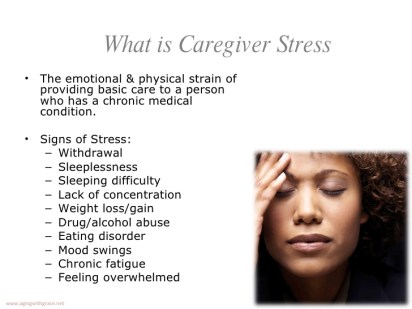
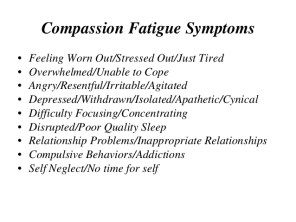
So your loved one is ready to come home from the hospital.  You may feel excited, nervous, impatient, and mostly prepared.  Nothing can prepare you for all the dynamics and changes you are about to take on, other than first hand experience.  Structure is imperative.  Especially if your loved one has a traumatic brain injury. The first two weeks home will most likely be the toughest to adjust to.  Don’t get caught up in the idea that they need a “break” and no routines, schedules, or therapies.  Recovery is enhanced with structure and consistency.caregiverstress

You may have realized by the end of the first week that you are feeling exhausted and scattered. You may feel like maybe you weren’t ready to take this on at all.  Who is this person you brought home?  They are so different. They may be painful, irritable, demanding, and impatient. It may be hard not to take this personally.  Your time is no longer your own and you are now responsible for every aspect of this person’s safety, health, and recovery process. You may become so focused on what you should be doing next to help with all the things that need to be done that you cannot sleep or slow down your thoughts. You may be feeling like you cannot do anything right….or perhaps you realize you are doing everything right, yet your loved one is not responding in the way you were anticipating they would.  You may find yourself tiptoeing around them, being cautious of everything as each hurdle presents itself.

caregiverstrain

By the end of the second week, you are fully aware of the time commitment that is involved now.  You may be losing track of time as your days now seem to run together. You may now be thinking of a thousand things you should have asked, learned about, or prepared for BEFORE your loved one came home. You may be feeling a bit overwhelmed and may even realize that you are not able to do EVERYTHING on your own.   It’s okay, you are not alone in this realization.  You also may actually be getting a better grasp of the schedule that is going to work the best for you to survive being a caregiver, while helping your loved one progress through their recovery at this point. You will most likely be beyond exhausted and unsure how you are going to be available to your loved one and still meet the demands, responsibilities, and obligations in your own life – that exist outside of your new caregiver role.

Your loved one has gotten used to certain schedules, expectations, routines,  push to be independent and compelled to focus on their recovery  in the hospital or rehab facility and will come home expecting those same things to be in place at home.  They may feel distant, resistant, challenging, and develop unrealistic expectations about what you are able to accomplish for them both directly and indirectly.   caregiverandworkstress

Sometimes your loved one, if they have a traumatic brain injury, may have a skewed view of reality.  They may have mood changes you are not used to dealing with, have difficulty adjusting to their “new normal”, and may have difficulty accepting the changes they are now facing every moment of every day.  You may be having difficulty adjusting to the expansive and growing list of needs and accommodations they now require.

You may have become overprotective at this point. You may be able to anticipate your loved one’s needs before they even ask for it.  You may micromanage every aspect of their day.  You may also be doing things for them, that they are able to do for themselves with a little supervision or prodding. This is not not good for your loved one in the long term to have you doing EVERYTHING for them.  It is imperative that you encourage independence as much as possible.  Help them with what they need help with, of course.  However, encourage them to do as much on their own as possible.  This will take them out of their newfound “comfort zone” and will not always be successful in the first attempt. HH_SEO_Graphics_CBDon’t get angry if they attempt something and do not succeed, or if they are unable to complete something they have attempted. This effort may takes weeks, months, and in some cases years of consistent attempts for this to happen succesfully.  For some caregivers, there is no mastering this aspect of the caregiving process.  You may have a loved one who is incapable of independence.  In that situation, set small goals for yourself, for them, and partner with providers to celebrate even the littlest victories or accomplishments.  Sometimes just getting up for the day, getting bathed and dressed for the day is the best that can be accomplished that day.
It is imperative to eventually include your loved one in as many life activities as is possible.  They may not be ready for this in the first few weeks home. Consider trying to take them on very brief, small outings with you a little at a time.  Even if just to a convenience store and then back home, the library and back home.  Perhaps even just a ride around the block after getting dressed for the day can be a huge accomplishment.  You can build to other places, longer times, and more challenging things as time progresses and they are ready.  Some things to consider when leaving the house with your loved one:

  • Have a “travel bag” ready to go with you on each trip that includes their medications,  a change of clothing (maybe two changes of clothing), items that help them cope, and notebook (with pen or pencils and higlighters in different colors)
  • Have something for them to drink with you (bottled water, thermos, juice box, etc)
  • Carry ear plugs, headphones, sunglasses, lap blanket, and any other things that may help your loved one when they are away from home based on their personal needs.
  • Allow tons of extra time for getting ready to leave the house with your loved one.  Allow extra time to make it to appointments on time.  I would suggest at least an hour wiggle room. Folks with traumatic brain injuries have a real challenge with being rushed, given too many tasks at once, or last minute changes.  Even though they may make many last minute changes in their level of participation, effort, and coping ability.
  • Be prepared to turn around and go home.  You loved one may have a meltdown, panic attack, behavioral outburst you are unable to manage safely away from home, or they may feel “flooded”or voice their desire to be home NOW.  Sometimes, when they have a medical appointment, going home is not a possibility until after the appointment.  Often times, going to a medical appointment will be the only outing they can do that day.

compassionfatigueThe largest part of recovery will take place within the first two years.  However, this is not where recovery ends. Research continues to show that healing, strength, behavior, body changes, and rerouting of the brain continues – even years later.
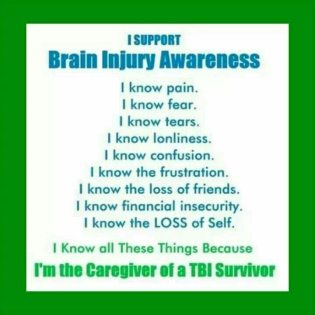
It is common to feel sad, depressed, or disappointed if your loved one has not reached the recovery level you anticipated at the one or two year mark in their recovery.  Your loved one also may be having some struggles around this time as well.  They may have expected to be further along in their own recovery, or reliving the time of year their accident happened and comparing it to their life before their injuries.  Families often misjudge the amount of time it will take for their loved one to recover or plateau ; especially if their obvious physical injuries/fractures have healed by this time and you are unable to “see” the traumatic brain injury.

tbisurvivorcaregiver


[Potential Providers may include the following:  physicians, physiatrist, nurses, physical therapists, occupational therapists, speech therapists, recreational therapists, respiratory therapists, counselors, psychologists, neuropsychologist, social worker, specialists, nurse’s aids, home health aids, medical case manager, family caregivers, volunteers, and/or clergy.]

~Compiled By: Caren Robinson


Suicide Awareness Week and Month

September is suicide prevention awareness month.

Monday, September 10, 2018 is suicide prevention awareness day.

September 9th-15th, 2018 is suicide prevention awareness week.

If someone talks to you about suicide or harming themselves or if they open up to you about how they feel, listen. Listening to and acknowledging someone can save a life.

Let’s work towards ending the stigma of mental health and suicide. Instead if saying someoneone committed suicide say they died of suicide or they died of depression.

People commit crimes, suicide isnt a crime, it’s the last symptom of depression.

Never Say These To A Caregiver

How to Survive as a Primary Caregiver Word Cloud Concept Text Background

Cindy Laverty, caregiver coach, radio talk show host, and author of, “Caregiving: Eldercare Made Clear and Simple,” offers examples of phrases that can leave caregivers thinking, “Did she really just say that?”

11 Things to not say:

1. “Why are you having such a hard time being a caregiver?” Usually voiced by someone who has never been a caregiver for a loved one, this question can be very difficult for a caregiver to hear. As Laverty points out, it effectively takes their role of providing care for a loved one, and diminishes it.

2. “Gosh…we haven’t seen you in such a long time. Why don’t you get out more?” Though it probably comes from a place of love, Laverty points out that this can be an unproductive way to express concern for a friend or family member who is a caregiver. “The truth is that most caregivers do need to get out more, but this is an insensitive way of saying it,” she says.

3. “You look really tired. Are you making sure to take care of yourself?”Caregivers generally have a good reason for looking tired and haggard—because they are. “The biggest issue for caregivers is that they tend to sacrifice personal care—it’s the first thing that goes,” Laverty says. Caregivers look tired because they are not getting enough sleep, they spend their nights worrying and making sure their loved one doesn’t wander. But, that doesn’t mean that they appreciate having that fact pointed out to them.

4. “Caregiving seems like a burden. You shouldn’t have to sacrifice your life for your mother’s.” Caregiving is hard. That’s why so many people, both caregivers and non-caregivers alike, refer to it as a ‘burden.’ But, according to Laverty, when a friend or family member likens caregiving to a burden, what they’re really telling the caregiver is that they aren’t handling the situation properly and that this isn’t what they should be doing with their life. “Caregivers get into their role because they started out as loving, caring people trying to do the right thing,” she says.

5. “You need to get a ‘real’ life.” As the old saying goes, ‘you’re preaching to the choir.’ “Every caregiver understands that they need to get a life, have a plan, start making time for themselves,” Laverty says. But, telling a caregiver to ‘get a life’ is like telling them that what they’re doing now (caring for a loved one) doesn’t matter.

6. “Why don’t you just put you mother in a nursing home? It would be better for everyone.” Laverty says that comments like this can make a caregiver feel like they’re not doing a good job taking care of their loved one. The reality is, a nursing home might not be financially feasible, or a caregiver may be trying to keep their loved one at home for as long as possible. Outsiders think they’re offering good advice, when they might really just (unintentionally) be making a caregiver feel guilty.

7. “Why do you visit your dad so much? He doesn’t even know you.” If a caregiver is taking care of someone who has Alzheimer’s or another form of dementia (or brain injury) and they live in a nursing home, people may ask why they bother to visit someone who doesn’t even remember who they are. “People need human contact and love, or they will just shrivel up and die,” Laverty says, “Caregivers shouldn’t feel stupid for going to visit someone who doesn’t recognize them outwardly. As long as they know who their loved one is, that’s all that should matter.”

8. “Don’t feel guilty about…” When you’re a caregiver, “guilt just comes with the territory,” according to Laverty. Caregivers want to fix everything, to solve every problem, to ease every hurt, when the reality is that no one can do it all. When people tell a caregiver not to feel guilty about something, it can make things worse by bringing that guilt to the forefront of their mind.

9. “Let’s not talk about that. Let’s talk about something happy and fun.” When it comes to your average small talk scenario, caregivers generally don’t have a lot of “fun” things to contribute. Laverty says that people need to understand that people taking care of an elderly loved one need to talk about what’s going on. Friends and family members of caregivers should take the time to listen to what a caregiver has to say, no matter how ‘unpleasant,’ or ‘unhappy’ it is.

10. “You must be so relieved that it’s over.” When their loved one dies a caregiver is likely to be facing a bunch of mixed up emotions. Relief may be one of those feelings, but Laverty feels that it’s probably not productive to point this out to a person who has just lost a parent, spouse, or sibling. “If you diminish the event, you diminish the life and effort of the caregiver,” she says.

11. “When are you going to get over it (a death) and move on?” Grief is an individual process. For some people, processing the death of a loved one will take some time. This is particularly true of caregivers, who’ve poured a significant amount of time and energy into taking care of the person who has just passed.

Journey Into the Dark Side

I have been reflecting.  Reviewing old notes, writings, posts from the first 3 years after the wreck.  This was the epicenter of the hardest of my recovery.  Also the hardest was not feeling listened to by certain providers, especially during that first year; these providers who dismissed my pain, and who I was supposed to be trusting with my care.

I have decided to share some of those thoughts here….in my Blog.  This one was from 2014 just after the first of several surgeries to come:

The Journey Into the Dark Side

I remember.   I remember going to Spectrum Health Butterworth for surgery. I remember the surgeon calling me the night before after weeks of trying to get a hold of him to quash my fears and answer the questions, which to him were probably nonsense….but to me – were the words that drove my every waking breath and desire to understand what I was about to endure.

I needed his reassurance.  His candidness.  His time. His empathy.  His patience and his understanding.  I needed his apology, which I doubt I will ever hear. I remember feeling frustrated and angry that he told me to call any time with questions and then never responded to those questions, leaving me hanging perilously from day to day as if I were waiting for my death sentence.

Each moment, perhaps my last with each click of the clock which hung on the wall and taunted me so consistently with each passing hour, day, and night.  To him he was probably busy, and thought I should just TRUST him because he was one of the best if not the best surgeon in his specialty/field…..but how could I trust when that trust had been shattered like the pieces that lay inside my body still broken, painful, and damaged?

That trust was broken by him when he didn’t believe me and my complaints of pain, and yet I craved his answers and solace to help me get through the coming days and weeks before that daunting day when I would go beneath his knife.  I craved his humanity and his ownership for his role in my current state.  Yet that never came.

I felt trapped.  I knew I needed the procedure….this surgery.  How could I trust once the betrayal had been sown?  How could I believe that this was the right thing to do by this same man who cast me aside like a scrap piece of paper not worthy of his time until I got beneath the glaring lights of the cold and clinical Operating Room…..where I saw him momentarily.

How could I in the face of adversity and enormously high risk of dying on the operating table….TRUST?

I took a break, several in fact, and pretended like everything was okay, for my family’s sake.  I don’t know how I made it through other than by faith, the driving and enormous desire for relief of the growing pain in my right side (where the ribs never healed) that never went away; and the increased loss of strength and use in my right arm (most likely from forcing myself through therapy for 12 weeks and putting forth my BEST EFFORT with tears flowing like endless waterfalls as I forced myself to continue each exercise…..not knowing that my shoulder/scapula was still fractured and had not healed at all either as well).

How could I push aside the rage and anger that made several professionals miss such an important detail that I was very vocal about?  How could I give in to the experience when I had so much left to say, learn, live, and experience?

I just kept breathing…..deeply, slowly, studying each item, each line in the ceiling as I was wheeled along in the stretcher.  I focused on the names of those pushing me, and their conversations and attempts to bring calm to me.  I embraced each quirk on the face of my husband, mother, and Medical Case Manager as this may be the last things I see.  I was acutely aware of every single detail and overwhelmed by the voices, noises, and conversations around me.  The lights were bright, my headache grew, and I had to take myself to another place while still being exactly where I was.  I know that sounds silly but I have no other way to explain it..

This fileting of my body with a magnificent dance of his scalpel tools and his skillful artistry beneath the clinical shroud of the operating room;  a handful of specially trained staff who would bring me to the other side of waking up once more…..or so I secretly begged for  – and perhaps begged for aloud as well.

I remember putting on my bravest face and not knowing if this was the day that I kissed my children goodbye for the last time before I saw them walk out the door to go to school;  not knowing if this was the last time that I would see my mother’s face, feel my husband’s touch, and I was so afraid.  I wasn’t afraid to die.  I just wasn’t ready.  I thought on this intensely.  Should I have written good bye letters the night before.  I had decided not to because to me that was the same as giving up.  How do I find the words to say the things that I feel? HowI do I make the words in my head come out on paper in the way I wanted them to and to have enough of an impact to make everything up to that point feel “worth it” when since the wreck I struggle just to get my words to get from my head out my mouth in the way I desire.

How do I trust God and the Universe and all my spiritual beliefs and experiences?  How do I know at this point that God is even real any more?  Then I had to remind myself of all the miracles surrounding the wreck and force myself to believe that miracles would happen that day.

As it so happened…..the 3.5 hour surgery we were told it would take turned into about 8 including the 2 hours in recovery, per my husband and mom.  The stakes were high.  The man I decided at the last minute to trust with my life in its entirety took me on a journey and he and his team brought me out the other side.

This was my first post surgical feeling of gratefulness!!! When my eyes opened and I noticed people rushing around me in recovery, and seeing my O2 sats in the 80’s but just feeling such calm, feeling peaceful, acutely becoming aware again, and just blinking ever so slowly…….grateful in that very moment.  Grateful that I had been allowed to once again survive that Journey…..

The Journey into the Dark Side.

~ Caren, 2014

carenpostsurgery

Brain Injury Poem

Brain Injury Poem 2: Don’t Take Away My Hope

Things may be bad sometimes and to some may seem hopeless, please just let me accept my life in reality and love my life anyway.
But I am pleading with you not to steal what keeps me going…Hope.

There are those times that I am quite aware of how bad things are,
those temporary moments when I can not see through my streaming tears.
But I am begging you to let me hold on to what I know I need…Hope.

Please do not ever say you could not stand to live the life that I have,
you could not possibly know unless my life were the life you were living.
I am asking you to let me have what I need most for the moment…Hope.

Do not make false promises or paint false dreams, let me have my own dreams.
Please do not as a professional, ever say there are no more answers or help.
I am pleading with you to allow me the life luxury I need most…Hope.

Always there are more answers, it may be just you without those answers.
When you say discouraging things,it makes it hard to hold on to my hope.
I am telling you that all patients need that one joint component…Hope.

If you have not walked in someone else’s shoes, do not be too quick to judge.
All of us at times face adversity, just some have to live with it all of the time.
We are somehow able to find strength and endurance through our…Hope.

No matter how grave the situation or how serious the medical problem,
remember that miracles and things not quite understood by man do happen.
Do not ever be so cruel and heartless as to take away someone’s…Hope.

Do not ever say we will amount to nothing or get no where in this life.
As long as we are alive, we can share with someone else what we have.
In giving to others the survival tips we have learned we give…Hope.

by: Debbie Wilson, 7-24-96

– See more at: http://tbilaw.com/brain-injury-poems.html#sthash.ZtsM34Hb.dpuf

Silent Epidemic: Domestic Violence

When we hear traumatic brain injury, we often think of a trauma from say….a vehicle accident, or sports, or falls.

It’s time to continue bringing awareness to this silent epidemic…Domestic Violence.

*Polytrauma and Traumatic Brain Injuries are common with Domestic Violence

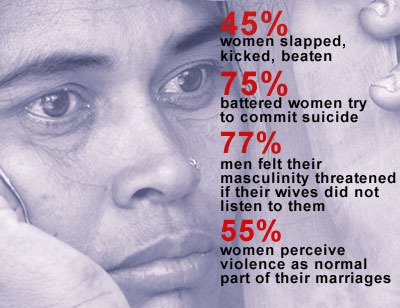
* Women experience about 4.8 million intimate partner-related physical assaults and rapes every year.

*Less than 20 percent of battered women sought medical treatment following an injury. A significant number of crimes are never even reported for reasons that include the victim’s feeling that nothing can/will be done and the personal nature of the incident.

*The cost of experiencing Domestic Violence includes medical care, mental health services, and lost productivity

*Domestic Violence affecting LGBT individuals continues to be grossly underreported; it is as much as a problem within LGBT communities as it is among heterosexual ones.

Domestic violence, also known as intimate partner violence, is a pattern of abusive behavior in any relationship that is used by one partner to gain or maintain power and control over another intimate partner. Domestic violence can be physical, sexual, emotional, economic, or psychological actions or threats of actions that influence another person[1]

Research on abused women shows that between 40 to 92 percent of victims of domestic violence suffer physical injuries to the head; nearly half of these women report that they have experienced strangulation, according to research published in October 2017 in the Journal of Women’s Health.

DID YOU KNOW?

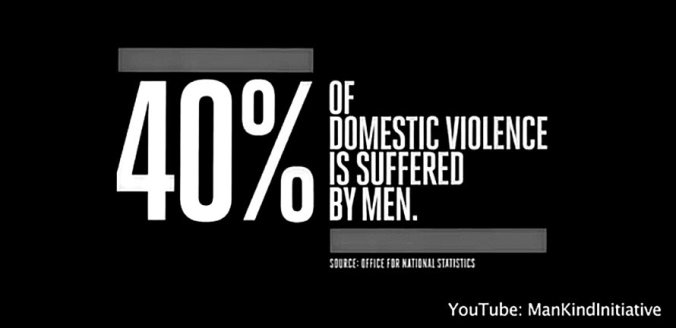
More than 40 per cent of victims of domestic violence are male.

40% of those reporting serious assaults by current or former partners in the past year were men, and most of their attackers were women.

80 per cent increase in reports from male victims between 2012 and 2016.

Women are as likely as men to be agressors.

Men also make up about 30% of intimate homicide victims, not counting confirmed cases of female self-defense.

Female-on-male violence is often assumed to be harmless, given sex differences in size and strength. Yet women may use weapons — including knives, glass, boiling water and various household objects — while men may be held back from defending themselves by cultural taboos against harming woman

Domestic violence against men can take many forms, including emotional, sexual and physical abuse and threats of abuse. It can happen in heterosexual or same-sex relationships.

Abusive relationships always involve an imbalance of power and control. An abuser uses intimidating, hurtful words and behaviors to control his or her partner.

Men who find themselves as victims of domestic violence are often viewed by and made to feel emasculated and weak. We are told to fight back and ridiculed for “accepting” or “allowing” the abuse. Many people don’t know how to approach the conversation for fear of adding insult to literal injury, or because they simply don’t believe a man can be a victim of domestic violence.

Men are expected to be violent and in control, particularly in control of women, while supressing their emotions and sucking it up whenever life doesn’t go their way. When a man steps outside of this box, he is often ridiculed as weak or as not being a “real” man.
This toxic view of masculinity often leads men to become perpetrators of domestic violence, but when they’re victims, it can prevent them from coming forward. The stigma, and the fear of not being believed, can be so strong that men simply don’t report the abuse.

Abused men have faced widespread biases from police, judges and social workers. Equality should include recognizing women’s potential for abusive behavior.

Claims on both sides should be fairly investigated — without political bias, sexist bias, or cultural bias.

Domestic violence service providers. Screen everyone who seeks DV services for TBI. A brief screening tool that was designed to be used by professionals who are not TBI experts is the HELPS.2
HELPS is an acronym for the most important questions to ask:
H = Were you hit in the head?
E = Did you seek emergency room treatment?
L = Did you lose consciousness? (Not everyone who suffers a TBI loses consciousness.)
P = Are you having problems with concentration and memory?
S = Did you experience sickness or other physical problems following the injury?
If you suspect a victim has a brain injury, or she answers “yes” to any of these questions, help her get an evaluation by a medical or neuropsychological professional – especially if she has suffered repeated brain injuries, which may decrease her ability to recover and increase her/his risk of death.

https://www.biav.net/traumatic-brain-injury-domestic-violence/

http://www.opdv.ny.gov/professionals/tbi/dvandtbi_infoguide.html

Printable version of Traumatic Brain Injury and Domestic Violence Quick Guide

Click to access Domestic-Violence-Fact-Sheet-lb.pdf

https://ncadv.org/statistics

Violence Against Women in the United States: Statistics

https://www.everydayhealth.com/neurology/shining-light-on-traumatic-brain-injury-domestic-violence/

https://www.npr.org/sections/health-shots/2018/05/30/613779769/domestic-violence-s-untold-damage-concussion-and-brain-injury

https://www.helpguide.org/articles/abuse/help-for-men-who-are-being-abused.htm

https://melmagazine.com/what-domestic-violence-against-men-looks-like-74ce9500ab8d

https://www.independent.co.uk/voices/domestic-violence-male-victims-shelters-government-funding-stigma-a7626741.html

https://www.mayoclinic.org/healthy-lifestyle/adult-health/in-depth/domestic-violence-against-men/art-20045149

http://www.latimes.com/opinion/op-ed/la-oe-young-sorenson-male-domestic-abuse-20180222-story.html

https://pro.psychcentral.com/exhausted-woman/2018/01/males-can-be-the-victims-of-domestic-violence-too/

Newer Brain Imaging Technology

Medical imaging is an important part of assessing the severity of head injuries, but a new device could help medical providers in emergency situations detect structural damage to the brain even before you reach a CT scanner.
The FDA approved BrainScope’s Ahead 100, in 2014, a device that patients wear on their heads – like a hat – that can produce an electroencephalogram of the brain’s structure.
May 18, 2015 BrainScope Company,
Inc. announced that the United States Food and Drug Administration (FDA) has cleared the company’s “Ahead 200” device. Using commercial smartphone hardware that leverages Google’s Android operating system, the Ahead 200 records and analyzes a patient’s electroencephalograph (EEG) using a custom sensor attached to the handheld to provide an interpretation of the structural condition of the patient’s brain after head injury.
It is indicated for use as an adjunct to standard clinical practice to aid in the evaluation of patients who are being considered for a head Computerized Tomography (CT) scan, but should not be used as a substitute for a CT scan. It is to be used on patients who sustained a closed head injury within 24 hours, clinically present as a mild traumatic brain injury (TBI), and are between the ages of 18-80 years.
In September 2016 Brainscope announced clearance by FDA for its latest device, the Ahead 300. This the first of the company’s products that will actually be distributed commercially and it was touted as their most advanced version. It utilizes disposable electrodes and a connected smartphone to process the information. It relies on the firm’s proprietary algorithms and machine learning to spot certain patterns and correlations within the recorded brainwaves.
http://brainscope.com/
(compiled from various sources)

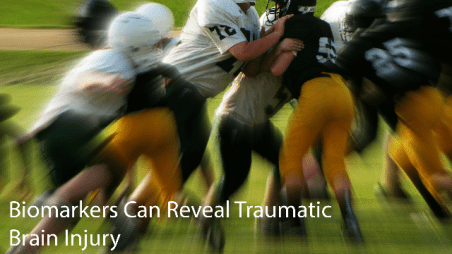
Biomarkers – Blood Work for TBI

biomarkers-can-reveal-tramautic-brain-injury-293810

Scientists are looking to biomarkers, or biological indicators, in the blood to help them differentiate between brain injuries of different severities. For example, there may be an increase of a specific biomarker in the blood of a patient with a severe injury that wouldn’t be present in a patient with a mild injury. When doctors are better able to determine the severity of an injury, they can make sure patients get the right care at the right time, and that could make a big improvement in their prognoses.

Some of the biomarkers used are the following:

•Known as Banyan BTI (Brain Trauma Indicator), the new test measures levels of two protein biomarkers — ubiquitin carboxy-terminal hydrolase-L1 and glial fibrillary acidic protein — that are released from the brain into blood within 12 hours of head injury.

The Brain Trauma Indicator blood test the levels of two proteins, UCH-L1 and GFAP. Upon brain injury, these proteins are released from the brain into the blood. If found at elevated levels, brain damage, with intracranial lesions, normally otherwise only visible on a CT scan, is suggested. Levels of these blood proteins after mTBI can help predict which patients may have intracranial lesions visible by CT scan and which won’t.

To give approval, FDA used data from a clinical study of 1,947 individual blood samples from adults with suspected TBI and compared blood test results with CT scan results. How did the blood test perform? It was able to predict the presence of intracranial lesions on a CT scan 97.5 percent of the time and those who did not have intracranial lesions on a CT scan 99.6 percent of the time.

•Levels of one protein, called brain-derived neurotrophic factor (BDNF), taken within 24 hours of someone’s head injury, could predict the severity of a TBI and how a patient would fare, they found.

While healthy people averaged 60 nanograms per milliliter of BDNF in their bloodstreams, patients with brain injuries had less than one-third of that amount, averaging less than 20 nanograms per milliliter, and those with the most severe TBIs had even lower levels, around 4 nanograms per milliliter. Moreover, patients with high levels of BDNF had mostly recovered from their injuries six months later. But in patients with the lowest levels of BDNF, symptoms still lingered at follow-up. The results suggest that a test for BDNF levels, administered in the emergency room, could help stratify patients.
•Tau protein (MAPT) possible biomarker for traumatic brain injury . The formation and accumulation of misfolded protein aggregates composed of amyloid-beta (Aβ) and tau. APT is a neuronal protein that plays an important role in axonal stabilization, neuronal development, and neuronal polarity. MAPT release into the CSF and blood has been interpreted as indicative of axonal injury.

It is believed that this biomarker may prove helpful in identifying high-risk patients with mTBI. However, additional studies are needed to establish the diagnostic value of serum tau in detecting traumatic brain injury in patients with mTBI.

(all information compiled from various sources)

Your Life Is the Miracle

I am grateful for so much.  The opportunities that life continues to give us to be together and grow as a family and as individuals.Miracleyouare

The last four years since the wreck have been crazy, intense, horrible, disappointing, amazing and life changing. We have had high highs and low lows.  There were times we didn’t know how we would make it to the next day, next week, or next month.

What we miss seeing at times is that we are all just passing time and occupy our chairs very briefly. We never know when that time will be altered. The time I have been given with my family is a gift.  We can let our experiences make us bitter or better.  We can be caught up in the darkness of our experiences or be guided by the light of strength, perseverance, and embrace the little miracles of the recovery process.

Some say we have had more than our share of loss. I see God’s light in my family every day. I may not understand the loss, pain, triumphs, and blessings – however I trust in the plan that is laid out for us and endeavor to accomplish as much as I can to live up to the gift I have been given by the miracle and grace of having survived so much.

lifemiracle

NEW STORIES – Matters of the Heart

share

I am a Survivor trying to bring inspiration and awareness about Polytrauma and TBI to others.

33 Months ago, our Website Page for YOUR STORIES went LIVE.  Since then, we have met some amazing folks and had the opportunity to share their stories, experiences, and soulful expressions with all of you out there.

If you have not submitted your own story.  You can do that by starting HERE.

Survivors, Caregivers, Providers; Parents, family, or friends – share your story to be published on this site today.  We are glad to help you in any way we are capable.

We have recently finished Stories for various folks that we would like to share with you.  Take a look, read some, leave a comment at the bottom of their story if you choose, and pass the link on.

Let’s bring Global Awareness to Polytrauma and TBI
NEW SUBMISSIONS:        Murray Dunlap – Survivor
                                             Bobby Porter – Caregiver
                                        Jason Stockman – Survivor
                                             Tiffany McCullock – Survivor

Be A HOPEster!

WHAT IS A HOPEster?

A HOPEster is anyone who is interested in helping one person succeed to be independent – even if the person they are currently helping is themselves (specifically related to Polytrauma and Traumatic Brain Injury – though can apply to anything other than these two things as well).

A HOPEster is someone willing to share information, offer support (whether that be emotional, mental, physical, or just by sharing awareness information), and encourages advocacy (self-advocacy, medical advocacy, advocacy awareness).

A HOPEster is someone that thinks outside the box, is passionate, idealistic, and believes in the inherent goodness of others and our collective responsibility to each other as human beings.proud-to-be-a-hopester

https://hopetbi.com/awareness-matters/hope-tbi-awareness/

Brain Injury Reversed In Toddler

Science is miraculous….HBOT therapy that reversed brain damage in toddler.

https://m.facebook.com/story.php?story_fbid=1933056560320331&id=1850833625209292

Story Submission Page – UPDATED

Check out our updated Story Submission Page.

Now with Caregiver and Survivor Writing Prompts

You do not have to be a writer to tell your story. Just willing to share it with someone.

https://hopetbi.com/your-stories/story-submission-guide/

Caregiver Story Prompt

Hello there. Thank you for your interest and considering our site www.hopetbi.com to share your story. I would be honored to tell your story as you wish to share it. We are glad to correct spelling so don’t worry about that.

I want you to be able to tell your story your way. Some things to include in your story that people often have questions about, are listed in the questions below….

Please feel free to add more than the questions listed. This is just a helpful starting point for a Caregiver story:

  1. What happened to cause you to become a Caregiver for Polytrauma or TBI?

  2. What injuries did they sustain?

  3. When did this occur (Date or Season and Year, or)

  4. How old were you when you became a Caregiver?

  5. How old is the person who acquired the TBI or Trauma? How many concussions or TBI’s have they had? How old are they now?

  6. How Long was their recovery? If still recovering what are you involved in helping them with, regarding care?

  7. Can you identify what your biggest struggles are or have been over the weeks/months/years as a Caregiver?

  8. What things do you do for self-care (to cope, take breaks, stay refreshed)?

  9. Were you financially prepared to take on being a Caregiver?

  10. Did you have any special training for the injuries of the person you are/were a Caregiver for?

  11. How has being a Caregiver affected your physical and mental health?

  12. Have you had the social support and resources you needed to provide the care needed?

  13. How has being a Caregiver impacted your relationship with that person since their injuries?

  14. Where do you go to connect to other Caregivers like yourself?

  15. What are some of your hope and fears regarding this whole journey as a Caregiver?

  16. Where do you live now (State, Country)?

  17. What do you want other people to know about your experiences?

  18. Why did you choose to tell your story?

  19. What name do you want represented online (first and last please)

  20. Do you have any pictures you want to submit of the before, during, or after? (accident, hospital stay, incident, etc?)

Ways to submit your story:

  • Writing it and submitting a saved PDF version of your story,
  • Emailing your story to hopetbi4ever@gmail.com.
  • Videotaping yourself telling your story and then we can type it up; or submitting a voice recording telling your story; and please consider submitting pictures to validate your story and make it more personal to others

Who can submit a story? Survivor, Healthcare Provider, Caregiver, Family relative, friend, etc.

Can a story be submitted for someone who has died? Yes, if their story involved sustaining a Traumatic Brain Injury or bodily trauma, and their death was a result of bodily trauma and or Traumatic Brain Injury/Acquired Brain Injury. Please message if you have any questions. You can be the voice of their story if you knew them personally.

Also for you to know…I am not representing any business and there is no compensation for sharing your story. I am a Survivor and saw a need I wanted to help with as much as possible. We post stories on our site to give people a voice to tell their story and a place where others can read it.

E-publish simply means (for our purposes) to post on our site.

SPECT CT – Diagnosing and Treatment of TBI

As Science evolves, so should the diagnosis and treatment of Traumatic Brain Injuries.

brainimagecolor

Check out our newly added Web Page:    SPECT CT


This is an important second test in settings where CT or MRI are negative after a closed head injury with post-injury neurological or psychiatric symptoms.

Medical Cornucopia

This slideshow requires JavaScript.

So something amazing happened during the last four years, in my recovery process, and through countless hours of rehabilitation.  I discovered that with all my new normals, some things remain the same, some things about me are vastly different, and some things have become hugely magnified or what was once dormant is now renewed in a different way.  What I am referencing in this particular post is my absolute love and passionate interest in medicine, science, and all that entails.

I find I am at peace the most when learning new material in these topics.  This has been my “go to” coping mechanism since I was like 5 years old.  Medicine has always been my first love.  I have gone away from it, come back to it, gone away from it again.  Then when I was wondering just what I should be doing with my life and evaluating whether to have more children, where to take my career, enjoying my job

Some people cope and find their center of “grounding” by running, drinking alcohol, exercising, listening to music, playing video games, communing with nature, watching TV/movies, smoking, having sex, going to church, participating in artistic expression, etc.  Me?  I find that Medicine, specifically investigative Medicine or investigating medical issues is one of the things that brings me a sense or peace, a sense of purpose, a sense of clarity, a calm.

That being said, in this upside down world of taking back my life from this trauma and all the subsequent experiences since the wreck I was involved in….I find that researching my injuries, how to better my life, how to prove the science behind all the subjective, objective, developmental, and evolving facets of my recovery is how I cope.  It has served me well and helped me find the best care, catch the mistakes made by providers, celebrate the things done correctly by providers, find the best providers, realize that even amongst specialists, even the basics can be missed; it has validated many things for me. It continues to enlighten me about the realities of living a new life, and how best to go about it.

Proper diagnosis, proper treatment, and proper documentation cannot be ignored as being imperative and important when somebody endures any medical event or has persistent symptomology. Science is changing and evolving every day.  How small, tunnel visioned,  limited, and narrow minded we would be as patients, as providers, as attorneys, as caregivers, as case managers, as advocates to ignore the advances  in Medicine (both traditional and alternative) and not allow ourselves the freedom to continue to learn, to do no harm, to keep up with current trends, and to evolve into something greater, broader, and grow beyond our proverbial box of comfort?

This website is a part of my legacy.  My venture into baring myself openly to all of you who come across this page, who see these words, who read about these struggles, these triumphs. My attempt to help you find resources easier, should you need them.  At the very least, maybe understand how multi-faceted and life changing a Polytrauma and/or Traumatic Brain Injury can be.

That being said, if you come across a new article, a new treatment, a new study, a new idea, a new topic you want to see in these pages,  a revolutionary sytematic way of addressing recovery and rehabilitation, I would be honored to hear from you and thankful for you sharing what you have found……. with me.

If you have gotten this far down in this post….thanks for sticking it out and reading it.  Please share with others.  Feel free to leave comments below.  I actually read them!

Never give up HOPE!


Legal Monstrosity

claims

Hello Folks. I’m back on my blog. YAY!!! While I visit often, I have lots to share with you all, and have much medical information, numerous discoveries, and lots of additions to add to this site over the next several weeks. Now however, I am in a position to express my own personal views candidly and without fear of reprisal about something I have been wanting to for quite some time.

It has been a while since I have posted in my blog here. I wanted to explain that in addition to focusing on my rehabilitation goals, I was also embroiled in a fight for my life with the insurance company representing me in my Michigan NO FAULT claim.

fighting

I had sued them for numerous items of service they were not paying on time/stopped paying under the laws that are supposed to, in theory, mandate and compel them to act in a judicious and timely fashion by the letter of those laws.

I, like so many other NO FAULT recipients, suffered additional and repeated traumas at the hands and manipulation of the Insurance Company(ies) that are supposed to be handling the various aspects of our NO FAULT claims. Instead, bills that they are supposed to pay in full, within 30 days of the bill being submitted to them (according to law); attendant care established through a prescription of a licensed physician ( for home health care, nursing care etc) provided by an agency or family member; medical mileage/travel supposed to be reimbursed after it has been incurred; replacement services (household services), wage loss, and other benefits afforded by Michigan law – they ignore &/or pay at their whim…not based on the actual laws. These laws are great on paper, for the constituents, yet there is no accountability for the Insurance companies to be mandated to actually follow the law on paper.

Did you know that the law States that the insurance companies can be charged “Interest” on any bill that is not paid within the 30 day time frame that it is submitted to the insurance company.

Again, this sounds good on paper, right? WRONG! Apparently the manipulation of that law is wholly accepted throughout the whole NO FAULT process as there are currently not any laws in place detailing when or how those interest payments must be paid AND making them non-negotiable items, or compelling them to actually be something the insurance company(ies) wish to avoid, because they would be required to pay that interest. It does not eliminate them from being negotiated away. They can only be charged this “interest” if you acquire an attorney, sue them, AND actually go through a trial where they can still negotiate out of that responsibility. The majority of cases go through a settlement procedure (like mine) and apparently that eliminates all possibility of them every having to pay interest on anything, that by law, they owe the interest on. This abhorrent process is just one of the many things that needs to be reformed in our NO FAULT system. Bottom line….if you don’t pay your bills within 30 days of receipt of that bill, you WILL incur interest for each day that is delayed. That interest should NOT be allowed to be negotiated away in Settlements, Trials, or other modalities regarding the NO FAULT process. This is a willful and purposeful choice they make, knowing there are no consequences. Holding them accountable, will, in theory, allow the NO FAULT system to do what it is supposed to do, take the burden off the individual who was actually in the wreck, so they can focus on their recovery. This would also take the burden off of the Courts being tied up in months or years of the back and forth legal ping pong that these Insurance Companies can afford to play. Reform should be attempting to compel the Insurance Company(ies) to do their jobs …..with our money.

The NO FAULT system through and through is a progressive, positive and integral part of our infrastructure in this State, absolutely worth saving and investing time and money in. It is a system to be envied by all other States and a model worth replicating. However, it is a system that needs transparency across the board, and accountability across the board as well though. After all, fraud and spuriousness is often propagated by the Insurance Company and their agent(s) themselves.

NO FAULT does require reform and clearer lines of accountability for all involved, but specifically the Insurance Providers themselves (obviously I feel this cannot be expressed enough). The very leviathan presence of these companies who with impudent disregard for the Courts, Judges, constituents, and laws voted on and enacted by the constituents (voting citizens) – often find themselves escaping their financial responsibilities, shirking the due diligence required of them, and using subterfuge and prevarication, knowing there is nothing to hold them accountable. Nothing at all. In my opinion, this is the grossest form of medical negligence, injustice, and sheer despicability.

That all being said, I have come to the end of this particular chapter of this grueling process through a Settlement process that was to say the least….less than desirable. Since physicianthe wreck I have literally fought for each breath, each step, each grip, each movement, each thought; each valuable, talented, progressive, and proficient providers; each benefit afforded to me by law, each opportunity to improve and have a decent quality of life. While not easy, while not always positive…absolutely necessary to survive.

I have endured countless days, weeks, months…and now years of acute/chronic pain, loss of body integrity, loss of social confidence, ongoing medical crises, and a complete change in my life, the way I live and relate to others and even relate to myself.

I have been made aware, through my personal experiences, of the dark side of the medical establishment that includes some incompetent white_coat_man_small_compressed_400x4008763830801952850647.jpgcolluding providers “in white coats and black hats (figuratively speaking)”, inaccurate medical documentation, missed/delayed labs, missed/delayed surgeries, missed injuries, delayed treatment,missed radiology exams, and the desperately fallible humanness of those we should be able to trust implicitly with our lives.


Despite all of this though….I have learned to advocate for myself on a different level. I have learned I AM a voice for those who are not able to be one for themselves. I have learned that we as a medical society are only just starting to learn about the miraculous processes that make us who we are.

I have learned who my true friends are or aren’t. I have learned that there is always a reason to HOPE and to never give up. I have learned that FAITH and LOVE really does prevail over darkness and injustice.

I have learned that every bit of essence that this blessing of a life has given me by the miraculous opportunity I have been given to survive is something to be protected and coveted. I have learned that sometimes being an honest, honorable, and sincere individual is sometimes just not enough. I have learned that discrimination comes in forms we don’t even talk about as a society. I have learned that I can endure more pain than I would have ever thought possible. I have learned that my life matters and I can find value in the person I am now. I am still learning how I can make a difference in this world and be a catalyst for positive changes and not compromise the core of who I am.

Finding the path to recovery is not just a journey….it is a pilgrimage. I will survive, despite continually traversing all of this Legal Monstrosity.

Your Life Matters

Believe your body. Trust your body. If something feels “off” then check it out. Be bold. Be brave. Keep striving to find answers to help you live YOUR best life.

Forget the naysayers, those who do not support your personal growth, and those who seek to bring you down.

You do not need to live the life others think you should be living; not the life others want you to live; not the life that cannot be reclaimed in the way you lived it before; not that familiar life from the past that you grieve being lost

This is YOUR life….your NEW NORMAL. Own it. Embrace it. Learn from it. Thrive in it!!!

Lone Wolf Journey

Your destiny is in your hands. Stay strong. Keep going. Never give up. Be bold. Be different!

#hope_tbi #survivorjourney
#polytrauma

https://t.co/ipfOlhbvUY

May the 4th Be With You

I spent the whole week anticipating when January 4, 2018 would arrive.

I was awake past midnight drinking in the fact it was finally here. I eventually went to bed confident I would wake up again in a few hours. I did wonder if I would feel differently.

It has been 4 years since the wreck happened as of Thursday January 4th, 2018. It has been hard to separate my life from that one catastrophic event and the events that took place around that time. It’s like my body’s cells hold the memories my mind cannot seem to bring to fruition in their entirety….even now.

All day my body ached, spasmed, and refused to cooperate with me. All day, with each deep breath and slow measured movement I was reminded that even though it was four years ago and a different time entirely – the pain goes on.

All day with each deep breath I was grateful. To be able just to breathe and be aware of what was around me seems like such a precious gift. To be able to hear the kids waking me up and to hug them and touch their beautiful faces was such a simple pleasure I lost for a while back then. To walk (albeit slow, painfully, and guarded) around and touch a door, a counter, the wall, a picture, and descend the 13 stairs that always feel like an accomplishment to tackle…going up or down – was a gift I remain grateful for still.

I have a life. No, it’s not my old life. It’s not a life without daily physical pain. It’s not a life without struggles on many unseen levels. Hell, it’s not even the life I wanted, dreamed of, or imagined for myself at this age. It is starkly different. However, it is still valuable. In many ways, even with all the seeming uncertainty my life still matters and I love my life even more.

The value of having love from a person who truly believes you and believes IN YOU cannot be overstated. That love pulled me through dark pain, dark thoughts, and from the other side where HOPE dies, Faith falters, and the darkness of depression laps up the drips of ongoing pain and overwhelming fatigue. Love, patience, acceptance, tolerance, validation, and empathy. I am blessed with these every day from my husband, my mom, my kids, my brother, and most of my providers.

I am stuck. Stuck between true determination, progress, and fortitude and a stagnant knowing acceptance of this pain going on for eternity. Stuck from moving forward as each step forward drags me backwards towards the abyss a little more each time. Stuck being a hypocrite of sorts because I work to find value in the pain and limitations of these disabilities. Even though I find myself begging for relief from my Creator as some days it is too much to bear. Stuck with wanting to work and bring awareness to Polytrauma and Traumatic Brain Injury ….all while having the consistent lack of cooperation from my body, mind, and utter lack of motivation.

I feel relieved for meeting people, groups, and providers who truly value life as I now know it and help me stay on track.

I feel like I should be saying something wise, positive, and upifting today to all of you reading this. Yet I have nothing else but that which I already continue to give. My transparent self.

So much swimming in my head today. So much healing validation. So much continued angst and so much continued life force to pay forward.

Let us remember the 4th Anniversary of my survival, my youngest son’s survival (and that of Greta the other driver). Let us remember that this was the day Caren died four years ago and was brought back; to show that HOPE lives and all things are possible as long as we dont get tunnel vision. With a little Faith and a whole lot of self-determination I embrace the desire to SURVIVE!!!

To all you other warriors out there standing up to your own dark sides and embracing the changes that continue to engulf you…or to those who are helping them face their daily battles….thank you. May you know peace, may you know relief, may my strength be the light saber that helps you find your own independent path as well.

At the end of the day, do your best. Make every effort count and never ever give up HOPE. May the 4th be with you!!!