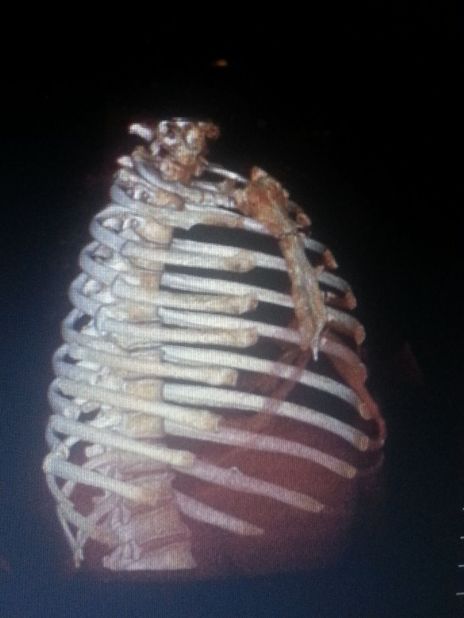
Thanks For Following HOPE TBI

I just wanted to thank those of you who have signed up on our email notification list here on our website http://www.hopetbi.com

I also want to thank you if you “liked” our page on Facebook and follow the Blog posts. It means a lot to me and hopefully what I write is helpful to you or someone you know in some small way.  If you haven’t liked our page on Facebook yet….now’s your chance.

HOPE TBI – FACEBOOK (FB) (online support and information Group)

HOPE TBI Co-Op and Exchange (donate items needed to others, acquire needed items  – no selling or vendors allowed here)

HOPE TBI – Facebook Page (we have a Facebook page; this is separate from the Support Group.  Remember to “LIKE” us on Facebook)

Follow us on Twitter: HOPE TBI (@hope_tbi)

Contact us:         hopetbi4ever@gmail.com

Remember to leave comments after you read an article, whether positive or negative. Your opinions are valuable and I welcome the feedback.

Help me bring awareness to Polytrauma and Traumatic Brain Injury….SHARE SHARE SHARE 😊

Love you guys muchly.  Never give up HOPE!!!

Hurtin’ for Certain

pain


Events are typically considered traumatic when they threaten the life or bodily integrity of the individual who experiences them. After experiencing a trauma people tend to develop certain predictable reactions.   Examples are the following:

  • Persistent and unwanted thoughts, memories, or dreams of the event

[while I have no memory of the wreck I was in, since I started dreaming again, I dream of being in wrecks, of my kids or family members dying in wrecks, and am consumed with many unwanted thoughts and various levels of anxiety when in a vehicle that varies from day to day.  On my worst days this creates a lot of fear and anxiety]

  • Heightened physiological arousal, such as tension, nervousness, irritability, startling easily, poor concentration, or poor sleep

[I can attest to all of this. This is one of the largest part of my recovery that I continue to work on and that gives me the most challenging hurdles to overcome and deal with]

  • Avoidance of places or things or events that are reminiscent of the traumatic event

[ I can’t say that all of this necessarily applies to me. I do like to avoid driving in bad weather, as it makes me quite nervous and fearful.  Stop and go traffic heightens my traffic anxiousness, and I have a lot of other challenges while riding as a passenger now…especially]

So, that being said, the wreck I was in was absolutely a traumatic experience.

I always felt I had a high pain tolerance before the wreck. I may have, I did give birth twice after all. Yet now I believe I was mistaken.  Childbirth Labor does not compare to multiple fractures and the chronic pain that never goes away from multi-system traumas.  At least with childbirth, eventually the pain stops and repeating that process is a choice.

My tolerance for pain has grown ten-fold.  What I would have gone to the hospital for before, I wouldn’t even blink at for a Tylenol now.  That being said, I have sunk into a new acceptance of this chronic pain filled body I live in now.  I accept it as my new normal.  My new cloak of pain I have become accustomed to.  Chronic pain that some days holds me hostage from accomplishing what I desire.  That is, until it raises its ugly head to show me it can still get worse with white hot nerve pain, muscle spasms, and a debilitating wave of continual sharp anchors that drag me down.

I have always had an intuitive relationship with my body.  A polytrauma screws all that intuitiveness up.  Some days it’s hard to know what is up or down or sideways with where that chronic pain is located.  Some days I can point right to its origin. Other times it feels like it is all over me and I can barely walk or pick up my feet.

I have been hurting a lot since I got off of the pain pills on my own.  My back aches, my feet intermittently get pins and needles.  My right knee doesn’t want to cooperate with that left foot that tends to drag by the end of the day.  My neck feels puffy, tight, and just hurts and acts like it has a little storm in there shooting electric lightening bolts down my arm to my fingers and up to my ear now and again.  My ribs that are plated, like to play musical ribs for the spasms and often include the right lung and back in their spasm just for fun.  My head throbs and I feel such intense exhaustion. Most days, it is a struggle to just get moving. Add that on top of the random high pitched dog whistle sound in my ear/head at inconsistent times.  Makes things quite interesting.

I am driving more now too…so that means no muscle relaxers or pain medication while on the road or doing errands. I am strictly diligent about this.  Of course, the trade-off  to taking on more responsibility is being more irritable, hurting more,  having more intense muscle spasms, shooting nerve pain, and dragging myself around literally days and weeks at a time without being able to get on top of the pain and discomfort.

joint pain

I am a whining mess as I type this as I so get tired of hurting and aching.  Here is the irony though.  I love being alive so much, and value life so much, that the value of living is worth more than the miserable pain that continues to come in waves.

I got news for ya’ ….Chronic pain threatens body integrity as well.  Any new flares that are not the new normal are seriously emotionally and physically exacerbating.  It’s like “seriously how much must I take”.  So the trauma continues and I remain….Hurtin’ for certain.

Emotional Lability – Web Page Update

Check out our latest Website Page – updated with additional relevant information.
You can find this under the “Rehabilitation Journey” Tab.  Then click the dropdown for “Emotional Lability”.
or go directly to page here:  Pseudobulbar Affect – Emotional Lability
Please consider leaving a comment under the article on our web page after you have read it.  We like to hear your feedback about what we are posting.  Thanks.

7 Mysteries of Polytrauma Exposed


mysteriesbrain

  1. Hermitdom – In the beginning, not only did I NOT want to leave my house to venture out into the outside world, I often was absolutely content to remain in my bedroom where I knew what to expect and it was somewhat controlled and felt safe and comfortable. This was my safe space.  Safe from the bright sunlight, safe from too many people talking at once, safe from the general noise of the world outside the room, safe from traffic, safe from having to explain what was wrong with me, safe from having my daily emotional breakdowns in front of others, safe from trying to stay awake, safe from being looked on with judgement or pity, safe from healthcare providers appointments, safe from additional pain from moving broken limbs across the room and down the stairs to face the reality I did not seem to fit in any more.anxiety

As time progressed, as my healing progressed, as I was forced out of the room due to sheer necessity to survive my pain, to attend numerous therapies and medical appointments, and to be a parent – I began to adjust to new tolerances.  I also learned rather quickly most of what triggers to avoid so I didn’t end up in a full blown panic and puking my guts up from the dizziness, headaches, and a bouncy massively overstimulating environment.

Getting out of the house is a solid accomplishment.  There is a lot of planning that goes into getting out and about.  There are things to consider that I took for granted before the Polytrauma.  Checklists are my friend.  If I deviate from this process we have established, things do not go well at all.

Some days I do better than others.  I find I am able to be out longer and more often than even a year ago.  However, I recognize that I do not have the same comfort level I used to before the polytrauma and I value getting back home as soon as possible.  Some days I still have to force myself to leave my room or go downstairs to the main living area of our home. Some days I feel ready to face the world, get outside, something happens that I didn’t expect and NOPE…back home I go.

Trips away from home, the longer the day, the busier the activity, the longer the recovery time afterwards.  A one day trip could take several days to recover from.   A day of appointments could take a week to level out from again.  If you have back to back appointments or requirements, it becomes a vicious cycle of feeling overwhelmed, incompetent, and beyond exhausted – just weary and pummeled.

So planning in advance, if possible, become a requirement.  Having someone help you organize your schedule, your time frames, your goals is imperative to attaining those small victories.

Having things to help you cope in moments you can’t be home is imperative.

  1. Brain Time – I created this term with my family. I wanted desperately to spend time with my kids, my husband, our friends, and people in general.  I wanted desperately for things at home to be normal.  Since the polytrauma I would feel emotionally and mentally….well…..flooded.  Like I was standing in the ocean and wave after wave was hitting me in the face and taking my breath away.  In my case though, sometimes their voices all at once, their walking, their questions, their playing, their presence is enough to overwhelm me.  It is like there are too many sounds to sort out or too many thoughts to try and think at once.  I would become irritable, frustrated, nauseas, and when I wanted it to stop…. it literally had to stop NOW, or I would puke, have an emotional crying meltdown, or just freak out.  So we came to an agreement that if I said “Brain Time”  all things ceased no matter where we were.

Reset-ButtonIn the beginning  I was at the point when I couldn’t easily reset myself, so I would say “BRAIN TIME”, go in my room (or they would have to leave my room), and I would stay there until things settled down in my head.  No interruptions, no calls,  no questions, door shut. Sometimes this was moments, sometimes minutes, often hours, or occasionally days.  I needed absolute silence, a dark room, a warm heavy blanket and to lay down perfectly still.  I slept a TON.

As time has passed and I am now three and a half years out from my trauma, I still call BRAIN TIME now and again, yet it is less often that it used to be and I have employed other coping mechanisms to help me reset myself.

However, once my brain has decided it has had enough for that moment, or that day. It’s like it’s done “now” and not even I can control the shut down process.  I am learning to pace myself still and manage this more effectively.  This does not make for a great social life though, I will say that.

  1. Directional Instability – Okay I gotta say I have always been the type of person to have a pretty decent sense of direction. I never had a problem getting “lost” when I went into a building, when I drove, or when I was walking somewhere.  I was always quite proud of this “inner compass” and it served me well in marching band when I was a teenager, in college and in my work life, when driving an emergency vehicle, when locating items others seemed to struggle finding, and when driving my personal vehicle.

After the polytrauma, it was like someone took that inner compass and smashed it. When I tried to lift my head, the room would spin like just got off a tilt-a-whirl on the Gravitron from a carnival.  When they would sit me (and eventually after I sat up on my own) I would be so enormously dizzy that sometimes that labyrinth of puking was unavoidable.  No to mention the throbbing headaches that seemed to be everywhere and made my forehead feel like it was 50lbs all by itself pulling me forward.  The back of my neck ached and I would often have a “belly ache in my neck” if that makes any sense. Looking up and left exacerbated EVERYTHING and so I learned to avoid looking that way.

redTwo and a half years after the trauma I started to return to driving. I would learn my inner compass was missing/broken.  I was horrified to find myself LOST after taking my kids to school.  In fact, I couldn’t remember how to get there….a trip I had made hundreds of times before.  I used a GPS because it was like I had never been there before.  Now THAT made me feel coo-koo….I didn’t understand.  Then I got lost heading home.  I literally ended up 20 minutes in the opposite direction because I couldn’t remember what to do or how to get where I needed.  GPS became an absolute crutch.  As time has gone on, I have gotten better about figuring out my routes.  Often times I could think of where I needed to go…yet applying it to real life outside my head was a different reality entirely.

It is a horrific and scary feeling to feel LOST.  I called my husband in tears a few times telling him I didn’t know where I was or how to get home (when phone died and I didn’t have access to GPS).  Most times he would answer the phone, sometimes  he didn’t hear it and I would be out there in a full blown panic.  I would feel scared and the noise around me seemed to get magnified to a level that felt like it was trying to kill me.  I could feel myself slipping into this dark space of isolation and I literally couldn’t think of how to fix it.  I do not remember how I made it home in those elevated panic times.  What I do remember is deciding I couldn’t drive yet and that I didn’t feel safe outside of my house, let alone my room.  It has been a massive process to get back to driving again.

Now I am driving more often and the short local routes I do really well at.  If I forget I just turn on the GPS.  We purchased a charger for the vehicle so I never have to worry about my phone dying (unless the bill doesn’t get paid – GPS doesn’t work then by the way).  So the phone is as important as the mortgage for me as far as financial priorities.

Buildings I have been to a lot I still get turned around in since my Trauma.  Oddly enough sometimes I get lost in my own neighborhood or kids’ schools.  If I survive an outing without getting lost, having a panic attack, or struggling to survive the experience – I consider that a WIN!

  1. Peat and Repeat Languaging – the way I communicated became annoying and complicated.  I not only would have to read numerous times a sentence or a paragraph to catch it all, I would also have to listen to a voicemail like 4-5 times to get it all because remembering the number or message seemed suddenly impossible.  When people would talk to me I had to have them look at me to hear them.  I found myself reading lips to understand what I was hearing, or thought I was hearing. Speech Bubble Indicates Speak Dialogue And Speaking If they turned their backs to me I would ask them to turn around and repeat what they said.  Some folks are super accommodating, some act put out by this.  Often times folks think you aren’t interested in listening or you do not care about what they said.  It wasn’t that, I just couldn’t process what they were saying.  Sometimes the words didn’t make sense. It’s like I was listening to a foreign language sometimes.  Sometimes it was like I could see their mouth moving, hear noise coming out, yet couldn’t make out the words.  This was maddening.   Oh!  if I was doing something and all my focus was on it (like typing or reading), forget about me hearing you..it just didn’t happen.

This has gotten better for me in a lot of ways through my rehabilitation journey,  not better in other ways – however, I keep learning ways to cope with it despite its abounding annoyance.  I am a lot better about being vocal about it though with who I am speaking to now.  Once you get used to functioning at a certain level it just becomes your new normal and you accept it as what is.

  1. Where’s the Word?… Doh! – Okay, I have always been a talker. I started talking early as a baby and I haven’t quit since.  I love words, their meanings, and expressing myself in a creative fashion.  I won spelling bees in my younger years and have always been a semanticist and quite loquacious.

However after the trauma, that seemed to also have changed.  I couldn’t remember how to spell basic words.  I find myself misspelling things often and missing the same specific letters when I type. I would look at say……a couch.  I could see the word in my head, I knew what it was, yet all I could get to come out my mouth was “that thing there that we sit on”.  I have become accustomed to calling things differently than what I am thinking now or what they actually are. Sometimes I come up with some pretty creative descriptions.

  1. Bon Appetit No More – Food has been my friend for years. My family has always celebrated with food, rewarded with food, and used meal times as a social gathering time to express our love while being able to share something we all enjoyed….cooking, talking, and spending time together.  I could always tell when I was hungry, when I was full, and when I was snacky.


bonAfter the polytrauma I seemed to lose the ability to feel hunger or fullness.  For some bizarre and I am sure possibly scientific reason I lost my appetite or desire for food in general.  No more interests, no more favorites, no more “cravings”, and no more enjoying the things I used to enjoy before.  My sense of taste and smell had changed.  Some of the things I enjoyed before now repulsed me.  Smelling certain types of food cooking was enough to turn me “green” (sick). Just looking at certain types of food was repulsive. The connection with food emotionally seemed to go on vacation.  In fact, if I wasn’t brought my meals in those early months and sometimes  still…I just wouldn’t eat because I would just forget to eat or have no interest in it.

As time has progressed, every once in a while I go from no appetite to suddenly HANGRY (angry rage filled hunger – almost a desperate hunger); HANGRY is rare though.   More often than not, I forget to eat or have no interest in eating.

I do like some textures or flavors of some things that I never liked before.  My family and I equally find this as quite bizarre.

  1. What Temperature Is it Anyway? I remember a few specific things during my recovery process that stood out and I still wrestle with. Chronic pain I have written about in other Blog posts and will probably write about again….however what I am referring to here now is TEMPERATURE.  More specifically FREEZING MY TUCHUS OFF!!!  I was always cold.  I couldn’t get warm, not even in the Summer months.  People would be sweating and I would be freezing and covered up with  my electric blanket and shaking from being so cold.  I gotta tell you that being so cold that you are shaking and having multiple fractures does not a good combination make!

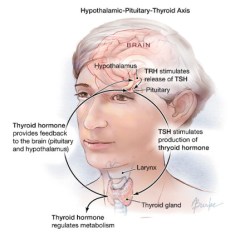
jamaprintI have come to realize that my thyroid-pituitary-hypothalmus axis was way off.  My hormones were all over the place and apparently I rattled that temperature control  center of my brain pretty good.

I still have some great hurdles to overcome when controlling my comfort regarding temperature.  At least now I can feel warmth eventually and not be as  cold.  Sometimes, I even get hot flashes occasionally and naked isn’t naked enough to cool down.  More often than not though, I still get cold.  Brrrrr’kin is what the kids call it.

So what temperature is it anyway?  I am probably not the most reliable person to                ask.  You might want to check outside…..then let me know.


There are many more nuances that go along with recovering from a polytrauma and these “7 exposed mysteries” are not an exhaustive list, not even for my experiences.

However, they are some of the things that are not necessarily visible changes to anyone who isn’t experiencing them directly and I felt they were worth mentioning.  If you are experiencing these things, you are not alone.  What you are experiencing is real.

Hopefully, understanding that this is now your new normal will help you accept yourself as you evolve towards your plateau in search for treatment and healing.


Michigan No-Fault Insurance – Is It Worth the Fight?

The answer to that questions is quite simple for me.  it is a resounding and emphatic YES!!!

I am so eternally grateful for the No-Fault system. I sustained a Polytrauma which included multiple orthopedic fractures (5 in my spine alone, ribs, wrist, pelvis, scapula/shoulder, soft tissue injuries, nerve damage, and a traumatic brain injury).

Thanks to Auto No Fault I was able to have the necessary MULTIPLE xrays, CT Scans and lifesaving surgeries to help me survive. I had to go out of State to save the use of my arm due to a shattered scapula as we have no Trauma surgeons in Michigan who were trained to do that repair. Michigan No Fault made it possible for me not to lose all of the function in my right arm. My whole scapula and shoulder had to be rebuilt.

Medicaid and Medicare would NOT have covered this. We would have been stuck in months of pre-authorizations and appeals and I would have died.

I would have left behind my husband (who is also my provider so I could remain at home and not in a nursing home) 6 children, a mother, a brother, a
nephew, and other family. I would have lost the ability to advocate for others and to function at the level I currently function at.

My story would have ended tragically. My story, while yes, tragic and traumatic continues to be HOPEFUL due to Michigan Auto No Fault.

I WILL need surgeries in the future. It isnt IF….its WHEN. Auto No Fault provides me with the medical security to still be here for my children, and hopefully some day….their children.

Please, I implore all voting members to vote

NO ON HB5013

YES on the Fair and Affordable No Fault Reform Plan

You are literally investing in Michigan’s future and survival by voting to save lives and protect the communities you are pledged and voted in by your constituents to serve.

What do you want your legacy to be as a politician, as a fellow human being leaving their mark on this world???

Someone who saved lives and cuts costs by holding insurance companies accountable, or someone who sentenced thousands of men, women, and children to death and financial ruin?

You can be the implement of positive change. You can be a hero. You can be a HOPE’ster.

NO ON HB5013

YES on the Fair and Affordable No Fault Reform Plan

Thank you.

https://hopetbi.com/2017/05/29/be-a-hopester/


UPDATE: 11/2/2017

HB 5013 did not have enough votes to pass. This is great news for the whole State, but especially for the recipients of No-Fault benefits.

The Latest and Greatest

Check out our Updated “How You Can Help” page.

https://hopetbi.com/about-our-site/how-you-can-help/

Sound of Silence

Much like the Simon and Garfunkel song…well, back to that in a minute.

Image result for sound of silence lyrics

So I have always been proud of my muti-tasking abilities throughout my life.  Being able to focus in many directions at once and deal with any level of noise without issues.  In fact, when I was much younger I used to go dancing and I loved bopping away and really enjoyed the techno beat of the music.  I used to be in marching band years ago, Jazz Band, Choir, Show Choir (kinda like Glee for those who have never heard of it) and let me tell you….you just get used to moving, spinning, dancing, and lots of noise.  I have always been a lover of music in almost all forms and preferred to listen to music almost all the time.

I loved going to football games, Image result for marching band competitionsporting events, and Pep Rally’s are an amazing memory.  As I grew into an older adult some of my music interests changed, yet I still held on to that love of music (which my parents would have probably argued on some days was noise to them).  When I worked in Emergency Medicine, I love the sound of the sirens, the pager going off, the squelch on the CB or radios, the multiple directions and decisions that had to be made to save a life.  I knew by their sounds whether it was “go time” or not.

When I met my husband I loved that he played the guitar.  My dad used to play all the time and we were a musical family growing up and I was quite ecstatic that I didn’t lose that with marriage.  When I became a mother I loved the sounds of my children.  All their sounds. From that first cry, to their first words, to their first debate/argument (yes – abhorred and loved at the same time too).  I was pretty good about being able to sort and filter out what I wanted to hear and didn’t want to hear merely by choosing…then remembering to finish what it was I was working on (which seemed to be everything all at once).  I could talk to more than one kid at a time, answer the phone, stir the dinner I was cooking, with music playing in the background….though admittedly it was often more than one type of music from more than one kid at a time as they listened to their “stuff”.  I loved my jobs.  I loved working and the business of it all and the multiple directions needed.  I was always felt I flourished in tight deadline and crisis situations in the workplace.  A lot of times, admittedly – in my younger years, my colleagues found me to be a little “too happy and cheerful”.  I heard that a lot.  What can I say……I really loved doing whatever it was I was doing at that time.

Studio28

There was also nothing more spectacular than going to a movie theater with the whole family and listening to the loud blaring beginning of that giant picture on the screen with each thunderous sound from one scene to another.  Now that is relaxing!

That is…..until the wreck.

I came out of that wreck different in a lot of ways I still continue to discover.   Some things about my personality became enhanced, some disappeared altogether, some new things cropped up that I have been unable to explain.  Some things about my tolerance, patience, general mood, ability to withstand hearing things in the same way and do things in the same way changed dramatically.  The way I thought about things, processed things, felt things, literally EVERYTHING became like I was experiencing them for the first time……or even worse, not at all. I do not dance anymore.  I do not multi-task like I used to, and I do not hear like I used to.noise

I honestly could not stand noise in any form for a while.  Literally, nothing.  Just the sound of the nurse’s feet walking in the room and the scuffing of their shoes was overwhelming.  The door opening and closing, the beeping and whirring sound of the blood pressure cuff, the constant talking in the hallway, the toilet flushing, people always asking me questions I couldn’t understand or I would answer quickly in the hopes they would soon just be quiet.  My memories of the hospital are in and out.  I remember voices and feelings more than I remember faces, names, or the day to day stuff that went on.  I remember pain.  Lots of pain.  I was dizzy, head a constant headache, and nope….no music thank you.  I also noticed I had a problem with how horribly bright it was everywhere.  When they would turn down the lights it was delicious and relieving.  Even the red lights from the monitor would hurt my eyes.  Those little night lights built into the wall at hospitals….nope, not my friend.

Then I went home.  Things were so different.  The house looked different as we pulled in the driveway.  The sound of the van door shutting, the leaves blowing, the clunk of the wheelchair, the shushing of the adults to the kids as I made my way inside.  The days that followed brought lots of appointments and a constant assault on my head, my eyes,  and my ears.  On top of it all I could “hear” the crunching of my shattered scapula moving with each therapeutic effort.  I could hear a high pitch tone that never seemed to go away for the longest time.  It almost sounded like a dog whistle or a fine squealing.  It was awful.  I noticed that while I had this going on, it sounded kind of muffled at the same time and it became difficult for me to focus on words, sounds, and more than one noise, or more than one person talking at a time was enough to send me into tears.

As time passed I noticed it helped if I read readinglipspeople’s lips to understand what they were saying.  Sometimes still I will see lips moving, know they are talking, yet understand NOTHING. I have learned to ask for repetition a lot.  Sometimes I just act like I know what they said….nod….and smile.  I learned little tricks, like wearing earplugs, sunglasses, carrying a blanket to cover my head with, lots of those types of things to cocoon myself from the auditory assaults of whatever environment I was in. Continue reading

Polytrauma – The Ripple Effect

rippledefinition

There is a chain of events that happens with an auto accident that involves serious injuries, polytrauma, or death.  rippleA ripple effect that swirls and snatches and seeks to destroy not just the patient, but the family, the spouse, and friendships of that patient as well.

First, there is the initial accident.  This not only causes the injuries, but causes a multitude of mental stressors as well.  Fear, anger, shock, disbelief, numbness, sadness, enormous helplessness and grief.  If the person survives there are things that help relieve those stressors – such as gratefulness, happiness, apprehension, confusion, hope, and for some, a distinct solidification of their spiritual base.

The stressor for the patient is that the accident itself has happened to begin with; thus causing a multitude of injuries that may affect more than one aspect of their life. They may have memory and cognitive issues in addition to orthopedic injuries.  They may have behavior changes and appear to be a different person than they were before the auto accident.

The person may or may not have support and help from a trusted circle of family or friends as they fight to survive, exist, and recuperate. After a while though, often times, friends disappear.  Sometimes, the burden is too big to understand or absorb for family as well. A catastrophic injury absolutely shows you the genuineness of the people around you. Life continues to move on without you and you become acutely aware of this.  The relatives, coworkers, friends who were supportive at first…eventually go about their lives and forget that you are there….still struggling.  The patient is left circling in the same spot, sometimes for months at a time.

Every stressful event that happens AFTER the accident compounds and slows the recovery process and adds to the mental and emotional stressors in the patient and their relationships with others.  PTSDAny delayed treatments, or misdiagnoses, or haggling over care of the patient (whether by the family or the patient themselves) causes additional added stressors, which impacts the ability to heal in a timely fashion.

Something not often talked about or studied is the real impact that Polytrauma and Traumatic Brain Injury has on the spouse or children of the patient.  There are changes that happen in those relationships.  The household dynamics may change significantly leaving the family feeling disorganized and broken.

Children may feel insecure, may blame themselves, feel helpless and hopeless about their parent’s recovery or their parent’s relationship.  They may act out in ways they did not used to.  They may regress in their development, they may become isolated or clingy. They may try to act in a parental role with siblings themselves.

Child trauma

They may find ways to cope that are not healthy.  Some kids are able to adjust to the changes going on with their parents with lots of support, education, explanation, and patience. Some are not able to adjust.  Sometimes the injured parent is too different for them to understand. Sometimes witnessing the changes in their parent is too painful.  Sometimes a spouse or child can incur secondary trauma/PTSD as their loved one recovers.

The dynamics in a marriage are also hit with one wave after another depending on the level of injuries a patient has and how severe they are.  In a polytrauma or with a traumatic brain injury, often times spouses are forced to take on the previous responsibilities of the patient (household duties, scheduling, transportation, budgeting, cooking, cleaning).  This may overwhelm the spouse if they previously depended on their now injured spouse to handle those responsibilities.  Compassionn FatigueThe financial stress will compound quickly.  The person injured, if a working parent, may be unable to return to work for a period of time…if ever.  This creates a massive financial dynamic shift for the whole family.   If insurance is not available, or does not cover all of the medical bill this can spell financial ruin for a family.  Not many individuals or families are in a financial position to endure a catastrophic injury/event.  This is only compounded when the parent that is left working loses their employment because they are taking too much time off work to care for their spouse/family member.  This can exponentially compound the stressors in the household.

Even the kids can be affected by the financial changes both directly and indirectly.  A family may have to go to food banks, acquire assistance from agencies for bills, food, utilities, transportation, etc.  Some may end up losing their homes and become homeless.  This is a dynamic ripple affect that goes beyond the initial injury at the time of the accident.  This ripple affect can continue for weeks, months, or years.

Brain injury often brings on drastic personality changes, which may include irritability, depression, limited awareness of injury-related changes, and argumentativeness.

never the same

Some spouses may feel like they are married to a stranger.

They become concerned about whether their spouse will ever be the same again.  The reality is, they will not.


The working spouse may feel alone in the marriage or like a single parent (if they have kids) due to the inability of the patient to take on the same responsibilities and roles as before.  The non-injured spouse may also lose their marital benefits for an undetermined amount of time.  The loss of a partner that they previously shared comfort, affection, mental support, and did activities with. This can put another layer of strain on the marriage, which is now no longer, a normal marriage.brokenheart

While most people, in an ideal environment without financial devastation and strong support systems in place, progress in their healing over time in a seemingly more timely fashion;  a patient with all these added stressors can actually see a delay or lengthening of their recovery period, an exacerbation of some of their symptoms and the real potential for more permanent disabilities.  Some patients may even develop mental health challenges in relationship to adjusting to their life of “new normals”. Coming to grips (acceptance) of their injuries, limitations, and the domino affect of seeming losses from their injuries, can be crippling and make the patient and their caregiver feel isolated and in a constant “survival mode” state.

The team in place to help the person recover should absolutely include their providers, and include the insurance company handling their claims as well.  Any delays or standoffs regarding reasonable and necessary patient care only seeks to elongate and sabotage the patient’s recovery and future progress.

The ripple affect continues.  The waves of pain also continue, yet the tsunami of numerous medical appointments lessen as time goes on.  The relationships the patient is left with will continue to shape the shores of their life as they now know it.   Some relationships will erode over time, some will get swept away by the current of recurrent trauma’s, some will stand the test of time and hold strong and true.

These moments.  The moments that are not measured by the number of breaths we take, but rather the moments that take our breath away are the ones that leave us grateful for being able to wake up to the ripple of a brand new day.

Fresh bamboo leaves over water

Crisis Text Line

FREE 24/7 support for people in Crisis.
 
Text 741741 from anywhere in the USA to text w/ a trained Crisis Counselor
 

WebSite Page Update – Scapula Nonunion

Check out our newly updated webpage about scapula fractures and shoulder injuries from trauma.

SHOULDER INJURIES FROM TRAUMA –  SCAPULA NONUNION

Scapula2014Scapula1

Quote of The Week

“You treat a disease, you win, you lose. You treat a person, I guarantee you, you’ll win, no matter what the outcome.”

~ Hunter Patch Adams

Flail Chest and Rib Plating

Check out our latest Web Page addition. “Flail Chest and Rib Plating”

Caren Robinson - Pics PreSurgery 3


Leave us a Comment Below….

Vision and Sensory Center

Vision and Sensory Center – Cutting edge of current science and treatment of traumatic brain injuries.

https://www.facebook.com/Vision-and-Sensory-Center-1822007318073764/

Chronic Pain is NO JOKE!


Chronic Pain Is No Joke!

So it has been 3 years 5 months and 26 days since the wreck I was in.  I just call this 3.5 years to round up when talking with people now.

So much has changed in that 3.5 years….and continues to.  The time I have spent adjusting to living with that pain will I believe be lifelong.  I have come to believe that pain is a lot like grief, just in a different form.  Like grief, there are various stages (also much like grief).

Grief Stages Denial, Anger, Bargaining, Depression, Acceptance

Denial & Isolation with Chronic Pain

The first reaction to learning about trauma is to deny the reality of the situation. “This isn’t happening to me, this can’t be happening to me.  I don’t have time for this to happen to me,” – though I think I skipped this first stage initially since I was so out of it.  I don’t think I had any ability to conceptualize what I had going on with me…..at least not fully. If I didn’t skip it, I don’t remember experiencing this as a first emotion.

I have always known throughout my life that it is a normal reaction to rationalize overwhelming emotions and to push away dealing with them for most people. This allegedly helps carry us through the first wave of pain or shock. However, when dealing with Chronic Pain that is caused by bodily trauma there is not just one wave or an “initial wave”  – there is simply….just…..PAIN.

The reason I said that pain is a lot like grief because pain comes in all forms. Orthopedic, muscular, nervous system related, brain/mental system related, endocrine systems, digestive system, reproductive system, literally every part of the body is engaged in this trauma when dealing with a Polytrauma and Traumatic Brain Injury.  Each system can be going through it’s own forms of “grief” or “changes” or they can all be happening at once….overwhelmed…..frozen…..stalled….or shutting down in response to the trauma.

Attempting to take all that in and learning that no one around you really truly understands is incredibly isolating.   Being unable to put to words how you are feeling when you have never been put into a place in your own life to need words to describe such a horrific continual experience feels isolating.  I would deny deny deny that this was actually happening – yet the pain made that reality absolutely undeniable.  All I could think of was PAIN….where the hell is all this pain coming from?  There was so much I couldn’t pinpoint a starting place.  It was like someone wrapped me in a warm pain blanket that was turned up to the highest level possible without relenting for months and months (literally)

Anger with Chronic Pain

As the effects of denial and isolation change in their dynamic,  reality and its pain re-emerge stronger than ever. I admit I was not prepared for this emotion which continually hits me in random waves. The anger may be aimed at inanimate objects, our healthcare providers, complete strangers, friends or family. Anger may be directed at the person we perceive that hurt us or even angry at ourselves. Often times feeling guilty accompanies being angry and for some people, this makes them angrier.  Sometimes being angry is a side affect of the trauma….especially if dealing with a head injury and the emotional center of the brain has been damaged.

As anger relates to chronic pain though – at least for me, the anger comes from not being able to do what I used to do.  Anger at having this affect my life, my mobility, my independence in caring for my own body, and change my normalcy to something I no longer recognized.  Anger at literally feeling like a prisoner in my own body and having expectations that are not realistic for the healing required for the injuries themselves, or my ability to deal with the injuries.  Anger about missed injuries, or those that are not healing as planned. Angry at feeling dismissed, not taken seriously by anyone outside of ourselves when I say I am hurting.  Angry about being financially destitute and unable to provide for my family the way I used to. Angry that I am hurting at all.

Some things that come with chronic pain and anger

  • Sudden muscle spasms or pain “flares”
  • Inability to take a deep breath or feel like the room is collapsing/shrinking around you
  • Feeling okay and then a wave of anger appears from nowhere and leaves just as suddenly as it came
  • Low tolerance for things you were able to tolerate before (everything seems exaggerated when angry or hurting and angry)
  • Guilt or shame for angry outbursts (when pain unrelentless or spiking) after you have had time to calm down and think about it
  • Appropriately angry about something but then transferring that anger to someone else about something completely unrelated to what you are really angry about

Bargaining with Chronic Pain

The normal reaction to feelings of helplessness and vulnerability is often a need to regain control. Let’s face it, with a polytrauma where you cannot walk/have difficulty walking, where you have to have someone feed you, dress you, wipe your butt for you, bathe you and leaves you feeling completely helpless – is a complete loss of control in its most humbling form

Admittedly I have always had a leadership/controlling personality.  I enjoy doing a job well and got value from how others viewed my ability to lead, accomplish, and successfully complete something.  I loved my independence and enjoyed working and breaking new ground in almost every aspect of my life.  Now I am trying to reinvent me.

Then BAM – chronic pain comes in and strips down any ability to control…at least completely what’s going on in your own environment – your own body.  This is truly where things spiral a bit…I personally tend to get consumed with dark thoughts and overthinking my care or lack thereof.  I think about how I can negotiate better treatments, better documentation, a better more proactive diagnosis.  It becomes almost obsessive.  I have to admit that there is a fine line between bargaining and advocacy for oneself (which has actually served me well orthopedically). However, along with bargaining comes some pretty repetitive self-talk.  This can be a strength and a weakness in the recovery process.

  • If only they had researched my injuries and found solutions sooner my rehab would have been shorter
  • If only they did the basic tests they would have caught that faster
  •  If only I got a second opinion from another specialist
  • If only I tried to push myself more
  • If only I didn’t push myself so far
  • If and if and if and if…even with God/Universe “God if you help me get through this pain I won’t do this”…..or “I will do this” just to help me deal with this pain that is controlling my life and every breath
  • Getting lost in “what if’s” and “if only’s” consume every decision in this stage.  This can lead you in directions of improved care, or hamper your progress – there is a fine line for sure
  • The desire to have my life return to the way that it used to be, restored to no pain zone, the ability to do more without pain, the desire to cope with the pain
  • The desire to go back and keep wreck from happening altogether

Depression and Chronic Pain

There are many types of depression out there.  There are 2 types of depression when dealing with grief and loss that appear most often though. The first one is a reaction to relating to the loss. Sadness and regret predominate this type of depression. We worry that, in our grief, we have spent less time with others that depend on us. This phase may be eased by simple clarification and reassurance. We may need a bit of helpful cooperation and a few kind words.

The second type of depression is subtle and, in a sense, perhaps more private. It is our quiet preparation to separate and to bid our old self as we knew it farewell, while dealing with our “new normal” and the chronic pain that we now live with.

With a polytrauma or traumatic brain injury a person is often on a lot of medications to control various injuries or mood disorders.  Some of these medications can actually cause depression. It is hard sometimes to tell where the depression is coming from and requires a thorough awareness of the patient’s medical history.  When dealing with depression in myself I learned my depression was there due to many factors – all secondary to the wreck and the ripple affect of all the injuries.  I got news for ya’ – peeing yourself in public because you aren’t able to get to the bathroom fast enough when that urge hits ya, living with a chronic headache pattern, chronic pain, and short term memory loss can be very depressing in and of themselves – and that’s just the basic stuff.  Now add money problems because you cannot work, being unable to pay bills on time, and all the other normal life stressors which now seem bigger than the pain some days and that depression can drag you down like a cinder block tied on your back while you are in life’s swirling pool.

Seeing your friends lives go on, seeing your family move on while you seem stuck in the same vicious circle – wake up pain, walk – pain,  exercise –  pain, carving your way through the day until you can go to sleep to hopefully escape pain –  (some days that actually works…… over time….until a pain flare)

When depression hits me hard, I notice that grief that holds hands with depression has a bit of a tighter grip. Sometimes this stage feels as though it will last forever and can feel truly overwhelming. I also notice that depression is harder to control when hurting.  So being in chronic pain is often not necessarily related to a mental illness (though can be related to endocrine and hormonal imbalances caused by trauma as well), but rather a response to hurting so much for so long and feeling frustration over adjusting to that “new normal”.  I also have realized that my pain tolerance has changed dramatically over the last 3.5 years.  I can withstand a lot more pain that I used to on some levels – not so much on other levels.  I also notice my depression has changed with that adjustment.

Also, by golly, depression is an appropriate emotion when experiencing great loss. A lot of people….professionals even – act like it is some kind of an unnatural process. That cloud of intense sadness that consumes one’s being when they feel like they are all alone in their experiences and realize that their life will forever be dramatically different is a real sense of loss. I really have to guard myself against that whole feeling of “what’s the point in living”  “why did I survive”  “what am I here to accomplish” and force myself to focus on positive self-talk.

Depression is not a “state to be fixed”, something to “snap out of”. Though I do believe it is important to recognize that our feelings are very real, but do not always tell us the truth about the situation.  Grief is part of the healing process.  Chronic pain is part of my life now.  Some days I manage it better than others – some days….not at all.  If grief is a process of healing, then obviously depression is just another important step on that journey. Allowing myself to experience it (yet not get stuck in it) is also an important part of that process.

Depression is also not consistent and can last a few moments to never ending cycle from day to day.   It’s okay to cry here and there for 5-15 minutes at a time my counselor told me. That is healthy.  It’s a problem though to be really addressed if it consumes your life so much you can do nothing else because of feeling so depressed.  If all I can do is think of the depression and cannot quit crying and am withdrawing so much that I am neglecting myself (eating, hygiene, activity participation), then more professional help may be needed.

Acceptance and Chronic Pain

Not everyone is able to reach this stage.  I still struggle with this stage myself on a daily basis in my rehabilitation process.  My counselor calls my ability to accept the changes to my life, my body, my new normals as a need to have “radical acceptance”.  Let’s face it….something radical has happened to me and therefore requires a radical form of acceptance.

Sometimes seeing beyond our anger or denial makes this more of a difficult process. This phase is marked by being calm. This is not necessarily a period of happiness and it is imperative to distinguish this from the apathy or withdrawal that I spoke about in depression.

So what does it mean anyway to have a radical form of acceptance?

Radical Acceptance to me, means completely and totally accepting something from the depths of my soul and with mind and whole beingness. I have to face the reality that I may never be able to work in the same way that I used to.  I have to accept that I am at my medical best in some things, still improving in others, and that yet others may never improve (or may even get worse). It means accepting I may need to use a cane, go to counseling, change the way I do things.  It means accepting that chronic pain is just a part of my life now and learning to work around it as best I can. It means knowing that my nerve damage may never heal (or it might) and accepting that.  It means to stop fighting reality.

Radical acceptance means that I do not allow myself to feel that rageful anger in my stomach when I am unable to do something I used to be able to do. It means not seething with resentment or bitterness when I see others who have similar injuries doing more than I am capable of with my own body.  Radical acceptance means, learning as much as I can, teaching others to do the same, and moving forward with my life.

Radical acceptance is way easier to talk about and understand than it is to actually put into practice in every moment of every day.  There are a ton of obstacles that come up to challenge accepting where I am at now. I do know that if I stop fighting all of this, eventually I will suffer less.

What Radical Acceptance is not:  It is not giving up.  It is not tolerating being mistreated or accepting a misdiagnosis. It is not stopping the ability to advocate for oneself or others.  It is not just accepting diagnoses as they are without researching the options thoroughly.  It is not giving up on caring about or speaking up for myself or others. It is not about being as silent as a church mouse in a corner with no thoughts and ideas of my own.  It is not about even….. being Radical (which some interpret as crazy, out of control, explosive, or some other such adjective).

Summary:

Coping with a polytrauma, traumatic brain injury, any type of grief, and loss really…. is ultimately a deeply personal and singular experience — nobody can know EXACTLY what you are going through.

There are many stages we all go through in our recovery process.  These stages closely resemble the stages of grief. There is no set time frame assigned to experiencing each stage, or a particular order in which we experience these stages.  Sometimes a person may never get to the Acceptance stage. This is however, the goal for myself.

Acceptance is often misinterpreted by others as the person being “all right” or “okay” with what has happened to them. This is not the case. Some people reach acceptance right away.  Most people though don’t ever feel okay for years, if ever. By achieving a level of “acceptance” a person is choosing to learn to live with their new normal self and move forward with their life.

It is not uncommon to repeat the various stages or be focused on one particular stage. Chronic pain can directly affect the way a person processes these stages as well.


(Over recent decades, a reasonable amount of data has been generated which suggests that greater acceptance of chronic pain is associated with fewer pain-related difficulties, such as distress and disability, and better overall quality of life (for reviews, see: McCracken & Vowles, 2014; Scott & McCracken, 2015; Vowles & Thompson, 2011).  http://www.bodyinmind.org/pain-acceptance/


About the 5 stages of grief:
In 1969, Elisabeth Kubler-Ross introduced the stages of dying in her book, On Death and Dying.
Before her own death, Elisabeth Kubler-Ross and her co-author, grief expert David Kessler adapted her well-loved stages for grief in their book, On Grief and Grieving.

Standard of Care

Medical-Standard-Care

What Exactly is “Standard of Care” as it relates to the medical community?

The “medical standard of care” is typically defined as the level and type of care that a reasonably competent and skilled health care professional, with a similar background and in the same medical community, would have provided under the circumstances that led to the alleged malpractice.

A diagnostic and treatment process that a clinician should follow for a certain type of patient, illness, or clinical circumstance.SOC

The level at which the average, prudent provider in a given community would practice. It is how similarly qualified practitioners would have managed the patient’s care under the same or similar circumstances.

1  2

**********************************************************************

I have learned over my entire life through various experiences; also being in the medical field for most of my adult life as a healthcare provider in some way, shape, or form that the Standard of Care is as varied as each personality that goes along with the person representing that Standard of Care.

When I had patients I always tried to give them the best of me and my knowledge of my acquired training at that time.  When I came across something I didn’t know (which was a continual learning process for sure)…. I immersed myself in learning about the things I didn’t know how to answer for what I was specializing in at that time. That was my way of making sure that I didn’t have that same issue come up again.  I guess I just assumed (yes, we know the misnomer of what assume means) that this is how all people sought to learn when they had a passion for medicine.  Specialists in a field even moreso…beyond the norm even.

Specialists, surgeons, Department heads I guess I always expected more of those folks.  Surely they kept up on all the latest trends, the newest studies, the symptomology associated with the topic(s) they specialized in.  Surely they could spot a problem, would assure that the best outcome for the patient was acquired, especially in favor of positive outcomes with their name attached to it.

Surely I could look at them, listen to them use my voice to communicate with them, and trust they knew what they were talking about because after all, their fervor and thirst for knowledge was above and beyond what the average medical professional entailed.  Certainly more than what I was trained to know.do-no-harm

So it only made sense that on that fateful day when I became the voiceless patient, clothing cut off to stark nakedness in an emergency room with massive injuries, multiple broken bones, head injury, and clinging to life with each labored breath…..that the sheer mechanism of injury (severe car wreck with ejection and other driver pinned and needing to be cut out) should have demanded a certain Standard of Care from every provider I came into contact with, within that first year, and every day after that.

I have had some really great providers. I still have some great providers. I want to say that first. There are a handful who have done their due diligence and even exceeded the Standard of Care.  They are the ones that listened.  That actually enjoyed their job and their patients. They are also the ones that keep up on the current and updated things in medicine, ironically enough.  They are the ones who think of ways to make things happen instead of making excuses of why they cannot make things happen.  They are the providers that never give up on you and take risks to better your quality of life.  They are few but mighty.  These are the providers I have learned a lot from and have enormous respect for.

The providers who fell short on their Standard of Care, or didn’t even attempt to live up to it…..  Those providers left me impacted in ways that created a ripple affect that delayed my care, caused me further injuries, and exacerbated things for my recovery process….and not in a positive way.  They are the providers who didn’t listen.  Who jumped to conclusions based on opinion rather than facts.  They fed off of other reports by other providers that also did not care, did not document properly, or dropped the ball in some fantastic and important way;  perhaps even adding wording that invalidated the injuries that actually were quite legitimate and yet ignored.  These are the providers that I felt I knew more about my care and the latest treatments available than they did (yes even if they touted themselves as specialists in that field). These are the providers I lost respect for, or never had the chance to establish such for.

The Standard of Care cannot be overstated in its importance.  If you specialize in a field, learn all you can about that field.  Study it, know it, and be willing to learn more about it. Medicine is changing daily and if a patient brings you the current studies, be grateful. If they discuss them with you and you have never heard about them, go look them up and research them yourself. Knowledge can only make you better at your craft.  If you cannot listen…truly listen to your patient when they say they are still suffering – you are in the wrong line of work.  Go on a quest, do no harm, and advocate for your patients.

The Standard of Care echoes through many professions, yet in this particular post we just address the medical view as a patient, medical advocate, a Survivor.

Expectations+of+Standard+of+Care

Be a HOPEster

A HOPEster is anyone who is interested in helping one person succeed to be independent – even if the person they are currently helping is themselves (specifically related to Polytrauma and Traumatic Brian Injury – though can apply to anything other than these two things as well).  

A HOPEster is someone willing to share information, offer support (whether that be emotional, mental, physical, or just by sharing awareness information), and encourages advocacy (self-advocacy, medical advocacy, advocacy awareness).

A HOPEster is someone that thinks outside the box, is passionate, idealistic, and believes in the inherent goodness of others and our collective responsibility to each other as human beings.


Proud to be a HOPE'ster!

(right click on picture to save to your device or share link in above web browser)

Thank you for visiting the HOPE TBI Website.

Please take the time to make a comment, share your thoughts, and tell us what impacted you the most and what brought you here:

Reviews and Testimonials

Your input is important to the development and growth of this website, and we like to know what is going on out there in your thoughts.

Thank you for visiting us! We look forward to hearing from you.

HOPE TBI – Bring Awareness Campaign

Hello There HOPE’sters.  We are thrilled to announce 2 awareness ads for this website for you to share in emails, in your social encounters both online and offline.

Below each video is a description of what the video is about and why it was created.

Feel free to click the “SHARE” button in the top of which video you like the best, to choose the sharing option you prefer.  SHARE SHARE SHARE….help us bring awareness to others.

This one was created with the thought in mind of how we can overcome anything with the right attitude, with awareness/education, and with proper support.  Support can come in the form of friends, family, providers, and even our own children.  It is important to remember to find our smile, to love, to laugh, and to embrace life and live it to it’s fullest – in spite of our seeming limitations and new realities.  That, in the end, we will be okay – because we have each other – we will overcome!

(of course bubbles always represented to me, a time of innocence, frivolity, and life’s possibilities – you never get too old for bubbles)


This one was created first and the song’s theme is “I will fight for you”.

I created this website with the idea of healing and fighting for myself and my recovery by learning and documenting as much as I could about my injuries…and then documenting what I had learned from my own experiences, documented research, and subjective interpretations.  I created the website with the desire of helping to fight for others with similar injuries (polytrauma or traumatic brain injuries) and help bring Awareness to as many people as possible.  I want it to be a global reach that says:

“Hey, you are not alone out there in your recovery.  You are not alone as a caregiver or a provider – you are not alone with the questions you have, the symptoms you feel, and the life you are struggling to make work for yourself or others”.    

I want this video to be something that is remembered.  Whether you hear the words “I will fight for you” as a song to yourself in your own mind to help you keep going – because your life is truly worth living; or as a representation of your desire to support and advocate for others….that you will fight for them, no matter what; or as a reminder that this site is a place you can come to share, get information, and feel like you are in a place that cares and understands.

The blooming flowers in the video are Cherry Blossom Trees.  This has been symbolic for me for quite some time now.  See our page under CHERRY BLOSSOM TREE PICS.


(any ideas or comments welcome – please post them below or email us through our Contact page)

Memorial Day Observed

Remember that our Veterans often suffer Polytrauma and Traumatic Brain Injuries in the course of battle in defending our Country and are often put into a position of representing our citizens abroad.  They are often put in harms way for the sake of the ideal of standing for the greater good and advocating and doing the proposed right thing.

Let us remember them honorably…those who have gone on before us and given their life in service to others.

The ones that make it home from battle are left to endure the lifelong effects of these life changing events, as are their families with a system that is ill-equipped to handle the atrocities of the perils of war and conflict.  We have come so far over the several generations that extend before our existence.  Our goals should always be to do better than the generation before ours and learn, strive, advocate, and grow – not just as individuals, but as a Nation.

The Veteran’s that don’t make it home, we, as a Country continue to remember.


HISTORY OF MEMORIAL DAY

Memorial Day is an American holiday, observed on the last Monday of May, honoring the men and women who died while serving in the U.S. military.

Originally known as Decoration Day, it originated in the years following the Civil War and became an official federal holiday in 1971.

The date of Memorial Day (also called Decoration Day), was chosen because it wasn’t the anniversary of any particular battle.

For decades, Memorial Day continued to be observed on May 30….. But in 1968 Congress passed the Uniform Monday Holiday Act, which established Memorial Day as the last Monday in May in order to create a three-day weekend for federal employees; the change went into effect in 1971. The same law also declared Memorial Day a federal holiday.

Many Americans observe Memorial Day by visiting cemeteries or memorials, holding family gatherings and participating in parades. Unofficially, it marks the beginning of the summer season..

For more extensive history on this somber holiday…check out http://www.history.com/topics/holidays/memorial-day-history

To all those who serve, or have served….THANK YOU!

Obesity Brain Injury and Trauma

Check out our latest page compiled/completed about Obesity Brain Injury and Trauma

If you have anything you would like to contribute, please let us know.

The Scapula Institute

If you follow this blog and Website you know that I am a survivor of what was a catastrophic motor vehicle accident, which resulted in a polytrauma in 2014. I continue to do my best to address each of my injuries in this website (see the various tabs) and blog about my subsequent rehabilitation (see frequently asked questions page for more information about HOPE TBI).
Through this whole process there are injuries that have been discovered which are somewhat subjective, some that are obviously causal, and then those that are absolutely empirical.  The most empirical injuries in a polytrauma are orthopedic injuries. Yet even with the vast knowledge, sacrifice, and dedication of our best orthopedic professionals, there is still more to learn about the body to facilitate repair and healing.  
At The Scapula Institute (St. Paul, MN) that is exactly what they do. Promote wellness, artistically and methodically delve into the seemingly impossible and make miracles happen.
I know this because I am one of their many success stories thanks to Dr. Peter Cole MD and his Trauma team.  Thanks to The Scapula Institute, Regions Hospital, Health Partners and St. Paul Radiology.  All of them. Working together in a cohesive way to affect change and dish up a bit of HOPE for those who have been cast out as hopeless.  I know this first hand after being told by numerous previous traumatologists that I just had to live with my injuries and they could not be fixed.  They were thankfully VERY wrong about my shoulder and the ability to have it fixed.
Dr. Peter Cole, MD is a visionary and progressive man and an artist with his Scalpel.  It is, in honor of his great works, and in true appreciation of having the majority of the use back in my right shoulder, that I (and HOPE TBI – which is essentially me too – lol) endorse The Scapula Institute and their endeavors.
It is rare to fracture your scapula.  In fact I did not just fracture mine, I shattered it.  That gives you a bit of an indication of the sheer force involved with the wreck and how truly blessed I am to still be here to talk about this.
Information taken from  The Scapula Institute  website: 
 “It is important to know that the majority of scapula fractures do not require surgery. The scapula has a rich blood supply, which helps fractures heal quickly. In addition, the surrounding muscles provide support for the bone during the healing process. These two factors can provide a very favorable environment for healing. There are, however, certain categories that may benefit from surgical intervention.
It is estimated that scapula fractures account for less than 1% of all fractures. It truly is a rare injury with few surgeons experienced in the surgical management of severe fracture variants. Please look through our site and then contact us regarding your specific needs. We are one of the world’s top research teams dedicated to all aspects of shoulder girdle trauma.”
The Scapula Institute has developed optimal diagnostic strategies in addition to pioneering advancements in the surgical treatment of complex fractures. “It is our goal to restore normal function to patients who have sustained injuries to the scapula, clavicle and shoulder girdle unit.”
 The Scapula Institute  has an International referral base. So don’t think that your ability to rehabilitate is limited by your location or Country you come from.

Let me know if you have any questions about my experiences.  I still have a long way to go….however, I am here…alive and able to complete my life journey…now with the use of both of my arms; man does it feel good to be able to hug with both arms again!!!

Never give up HOPE.

Brain Injury does NOT equal Lack of Intelligence

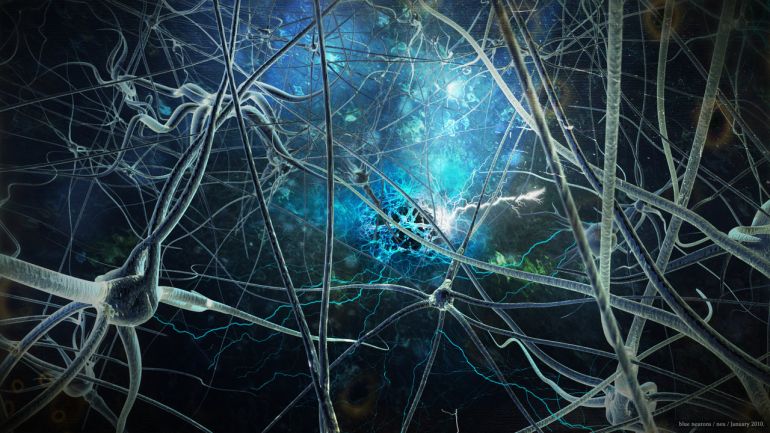
blue brain

Brain Injury does NOT equal Lack of Intelligence

Unless there is objective evidence of brain injury on MRI or CT Scan (hemorrhages, hematoma’s penetrating skull fractures into the brain, etc) people assume the individual expressing symptoms of a traumatic brain injury is faking, exaggerating, or malingering their injuries or the person has psychological problems that had to have pre-existed before their accident.  The reality is that the majority of mild (mTBI) and moderate brain injuries show normal results on an MRI and CT scans.  They do not show diffuse axonal injuries nor do they show levels of intelligence. Keep in mind also, that women also tend to have longer recovery times than men with regard to brain injuries as shown in recent studies.

Diffuse axonal injuries (DAI) are caused by acceleration, deceleration, and contact forces. DAI affects individual nerve fibers which can lead to a disruption in nerve communication.  DAI is microscopic damage to the axons in the brain neural tracts, corpus callosum, and brainstem, is associated with significant mortality and morbidity. When these forces are great enough it creates a shearing force that severs the axons of nerve fibers, which causes nerve cells to die and can create swelling in the brain. The main symptom of diffuse axonal injury is lack of consciousness, which can last up to six hours or more. A person with a mild or moderate diffuse axonal injury who is conscious may also show other signs of brain damage, depending upon which area of the brain is most affected.

Diffuse axonal injury causes cognitive, physical, and behavioral changes that compromise social reintegration, return to productivity, and quality of life of patients and their families. These changes persist beyond the acute phase of treatment and continue for a long period after the traumatic event. Diffuse axonal injury, and more generally TBI, often results in physical, cognitive, and behavioral impairments that can be temporary or permanent.brain network

Due to the diffuse and microscopic nature of the injury, CT scans and general MRIs are typically negative unless small areas of bleeding within the brain are noted within the cerebral cortex or corpus callosum (tracts of white matter in the brain). If a patient presents with unconsciousness and these tests are negative, the medical facility should move onto a different imaging technique to check for DAI. Depending on the severity of the injury and the extent of the damage. A concussion can be considered a mild case of shearing brain injury. At its mildest, DAI can occur unnoticed.

Someone with diffuse axonal injuries that don’t’ show on an MRI or CT scan may also have axonal injurybrain inflammation or swelling.  This can lead to restricted blood supply to the brain tissue and brain herniation. Tonsillar herniation is a type of cerebral herniation characterized by the inferior descent of the cerebellar tonsils below the foramen magnum. Chiari one malformation is a form of tonsillar herniation and is now known to be caused by trauma (like severe whiplash and traumatic brain injury) or in most cases “symptoms awakened” from trauma.  This is an often overlooked correlation between trauma and DAI and TBI.
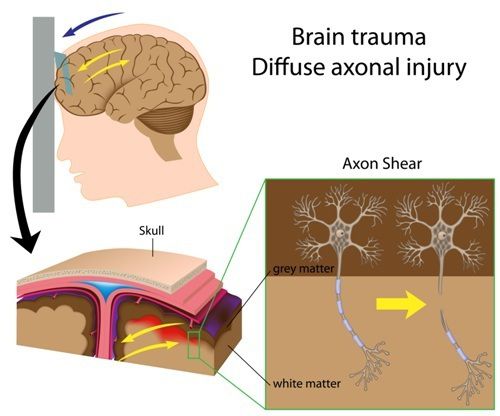
The occurrence of DAI depends on the mechanism of injury; it is more common in higher energy trauma, especially traffic accidents.  Someone who has incurred high velocity trauma, blunt force injuries, or multi-system traumas often have post-traumatic amnesia (PTA).diffuse axonal injury  PTA is another good estimate for severity of a brain injury. Anytime a person has a major blow to the head he or she will not remember the injury and related events for some time afterward. People with these injuries might not recall having spoken to someone just a couple of hours ago and may repeat things they have already said. This is the period of posttraumatic amnesia. The longer the duration of amnesia, the more severe the brain damage.

A brain injury does not necessarily affect intelligence. Intelligence is a stable trait which includes many aspects of cognitive functioning. Following a traumatic brain injury, the brain is unable to function as well as it did prior to injury. This is why we typically see some difficulties with memory or academics. However, once the brain recovers there is no change in a person’s overall intelligence. Your intelligence is based, depending on the definition of intelligence, on the son total of your knowledge.

Someone’s IQ can be unaffected by a TBI, but other parts of the brain that “pilot” or guide one’s brainpower can be messed up. Decision-making and complex social interactions can cause major problems in one’s life and career. The individual with high intelligence may still have cognitive problems such as headache, difficulty thinking, memory problems, attention deficits, mood swings and frustration. These injuries are commonly overlooked, especially in those with high intelligence.  Their low threshold of functioning or slower processing speeds may appear as average where prior to injury they would have tested as above average..

The brain of the intelligent person is more complex in appearance, not as soft, and has greater weight relative to size. Additionally, it can be noted that the intelligent brain may have an enlarged prefrontal cortex or parietal lobe relative to other areas of the brain. More intelligent people have more wires, more connections and more complex architectures in their brains. These are reflective of genetics, as well as developmental experience. blue brain womanAlso, more intelligent people may enjoy higher processing speed or impulse conduction in brain-wires (axons). But with more complexity in the brain, the net result still could look in performances as much slower decision making resulting in a dulled sense of self, lower test scores compared with their education/experiences, and reduced overall performance compared with their performance before injury.
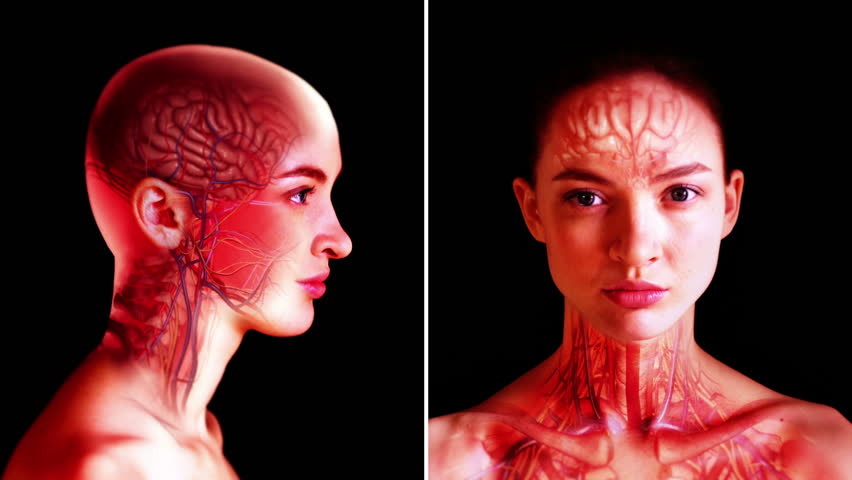
That being said, Intelligence and personality dysfunctions after minor traumatic brain injury (TBI) (whiplash; slight head impact) incurred in a motor vehicle accident (MVA) were studied in adults after an average interval of 20 months. There was a mean loss of 14 points of Full Scale IQ from estimated preinjury baseline IQ determined from the standardization group (WAIS-R) without evidence for recovery. Personality dysfunctions included cerebral personality disorder, psychiatric diagnosis (30 of 33 patients), post-traumatic stress disorder, persistent altered consciousness, and psychodynamic reactions to impairment. Cognitive loss is caused by interaction of brain injury with distractions such as pain and emotional distress. Unreported head impact and altered consciousness at the time of accident contribute to the underestimation of brain trauma after minor TBI.

Just one concussion can lead to a decrease in brain volume, according to a new study in the journal Radiology.

Specifically, researchers from New York University’s Langone School of Medicine found that people who had suffered a mild traumatic brain injury and experienced symptoms of the injury a year later also experienced brain atrophy (brain shrinkage).

“This study confirms what we have long suspected,” study researcher Dr. Yvonne W. Lui, M.D., assistant professor of radiology and the neuroradiology section chief at NYU, said in a statement. After mild traumatic brain injury, “there is true structural injury to the brain, even though we don’t see much on routine clinical imaging. This means that patients who are symptomatic in the long-term after a concussion may have a biologic underpinning of their symptoms.”

brain

Researchers specifically found that those who had sustained a mild-traumatic brain injury had less brain volume in regions linked with anxiety, memory and attention problems.

The bottom line here is that you can have a mild or moderate Traumatic Brain injury with long lasting debilitating symptoms and still have the same intelligence.  You can have a severe traumatic brain injury with empirical radiological evidence and still maintain your intelligence.   Brain injury does not equal lack of intelligence.  A person’s intelligence is not a solid basis for deciding a person’s extent of disability after an injury.

The High IQ TBI  (a blog which is worth the read about high IQ and TBI – this will take you to a different site)

Refrences:

1,  2,  3,  4,  5,  6,  7,  8,  9,  10,  11,  12,  13,  14,  15


New Patient Story Submitted

Hey guys and gals….  Check out our latest story submitted by Tiffany McCullock – Survivor

Mental Illness and TBI

Mental Illness and Brain Injury Are Not a Dual Diagnosis 

https://youtu.be/y3-wLp9RyCs via @YouTube

Survivor Stories

Polytrauma / Trauma / Traumatic Brain Injury

Check out our Survivor Stories

We are working on some submitted stories right now.  If you want to submit yours let us know. See our Story Submission Guide.

The Unspoken Truth – Emotional Overload

I really do not like the question “what do you do all day long?”breathe

It differs so much from day to day and moment to moment that having a schedule is sometimes a curveball I miss catching; so there is no simple answer.

Before the wreck the answer was a lot more simple. Before the wreck it was wake up and get kids ready for school. Run errands, set appointments, pay bills, clean, organize, manage the household schedule, keep track of the budget…all this before I went to work for an 8-12+ hour shift. Come home check homework of kids, enjoy the family or deal with family drama (any day is a toss up with kids truth be told). Deal with all the things that comes with having a blended family, in-laws, and being a working mom and stepmom.

In my life before I would often be described as independent, bold, courageous, strong-willed, determined, a goody two-shoes, ethical, self-conscious yet perfectionistic, accomplish anything I set my mind to; a great multi-tasker, and adventurous.

THINGS I DID BEFORE: I was involved in my kids schools activities, field trips, PTO’s, on top of my full time work life. On top of all that Rick (my husband and I) managed to still do stuff with the kids and with each other away from the house. Though I have to tell you work was the main part of our lives as we both worked full time+. I loved to drive. Man did I love to drive. I even have my motorcycle endorsement (yep even used to own two of my own motorcycles before I met my husband). I loved going to the movies, the beach, museums, comedy shows, community events, carnivals, fairs, and other community events/fundraisers. I had a life that made me feel fulfilled and though stressful, exhausting, and full – nothing that a good night’s sleep, a warm cuddle, a payday, or a homemade dinner couldn’t fix. In some ways I believe I wore rose colored glasses and saw the potential and possibility everywhere. I also had a LOT of responsibility and my husband always referred to me as his “walking filing cabinet” (cuz I rarely forgot anything and knew what was going on when and where). I feel I always survived grief and stress with some kind of grace.

FAST FORWARD TO AFTER THE WRECK…..

A total cumulative time in the hospital as a patient 6+ months, literally 100’s of medical appointments, 4 surgeries, 100’s of therapy appointments, tons of labwork, and radiology galore. Near death experiences. Enormous and unwavering pain in ways I never imagined feeling such pain. A complete stripping of the body, soul, and mind through harsh realities about how the world works…..or rather doesn’t work if you are in a position to depend on it for your day to day survival.
Pain pain and more pain. The pain is so much that after a while you build a new tolerance to where the pain exists for so long that you almost don’t notice it because it is so much a part of you that you don’t remember the last time you didn’t have it. Then another surgery brings some relief and you get excited and become hopeful and then BAM something else pops up, or it flares up. All of a sudden, you wake up one day and realize that you are depressed, angry, about all that this “wreck” has seemingly taken from you. You find yourself so deeply exhausted, fatigued, and emotionally overloaded EVERY DAY that you want to cry but you have no tears….only sadness and a feeling of defeat. You look at yourself and you wonder what happened to that busy person who seemingly did everything. Where did she go? You entertain dark thoughts that you keep at bay because if you focused on them they would surely overtake you and swallow you up. Radical acceptance is painful you realize. Accepting that your new limitations, your memory problems, your scattered disorganized, lack of focus, emotionally mercurial self is your new normal. Suddenly you have all these rules about what you can and cannot do, why, when, and yet you keep pushing yourself anyway. At what point does the emotional overload – overload you to a point of no return? Every time I feel I cannot take any more…more is given to me by my body, or the universe that pushes me further down the rabbit hole.

The harsh reality and unspoken truths that no one really talks about as your healthcare provider….is that after extensive injuries is how the picture of your sex life changes dramatically; they don’t tell you that your social life, your work life, and your sense of self identity (unless you fight like hell to stay afloat) all changes; but these are real things that I think about.

Will I ever be able to return to a job again? Will I ever be able to think and function like I did before? Will I ever get my memory back? What does my future or life expectancy look like? How can I get value from the life I have now? How do I get away from living a life that I don’t truly get a sense of accomplishment from? How do I live a life for myself that has meaning, value, and matters? How do I not give up when the obstacles seem so impossible to overcome? How do I be for my kids, my husband, my family, what they need me to be – when I don’t even seem to be enough for myself? How much am I willing to do today which takes away from what I can do tomorrow.

I often think how would people describe me now? Brave, a miracle, survivor, pessimistic , emotional flooding, anxiety, impatient, forgetful, hurting, impatient, boring, scattered, obsessive and compulsive, lacking filters, insecure, intolerant, and riddled with panic, PTSD, irritability and feeling extreme waves of helplessness in this enormous sea of HOPE, love, and a desire to overcome, heal, and accomplish.

That me….the one who longs for normalcy….THAT woman seems further and further from my reach some days. Stricken with a deep-seated grief process as my childbearing days have surely come to an abrupt and non-consensual halt and the barren feeling and realization that having any more children would be dangerous to my body and would also require some kind of bodily performance that my body has seemed to have abandoned and I have been in deep grieving about. You know that song called “Someone that I used to know”…..yeah that is pretty much how I feel about sex right now. It’s how I feel about the ability to be a person who has to let go of the idea of bringing new life into the world. It’s also though how I feel about how I identify with myself as this person that exists now only in the shadows.

Here I am….and here is one more thing that the wreck seems to have stolen….. that level of intimacy from my marriage dented…that changed the dynamics of our relationship.

Take, take, take. These injuries just keep taking from me and my family. I need to change my thinking I tell myself and I do; I change my thinking. I need to change my direction I keep telling myself…so I focus on helping others going through this kind of struggle.

THINGS I DO NOW: Sleep, home therapy programs, medical appointments, research my medical stuff, blog to help myself and others with Polytrauma and TBI, sleep, cope, be the best mom and wife I can with where I am at right now (which is not even close to where I want to be), more activities as my body will allow, and did I mention sleep?

Knowing I HAVE to go in a direction of mind and body positivity to stay motivated (huh…what is motivation?) and having no clue how to get there is very lonely and makes me feel lost sometimes.

I have to be kind to myself in order to move on. Dancing through the dynamics that each day brings is sometimes seemingly impossible. Yet somehow, someway between each excrutiating headache or spasm….I scrounge, pillage and plunder and find a wee bit more courage to get me through the day.

Defeat, Depression, cycling grief and a dedicated struggle to excel and never give up – the unspoken truth of emotional overload from a Polytrauma.

Menses and Sexual Changes – A Taboo or Overlooked Topic After TBI and Trauma

So hello there soul searchers.  There has been a lot going on with my body and my life over the last 3 years.  I have gone from calling it “my wreck” to “the wreck”.   For the longest time it called it “my wreck” because it was something that had happened to ME.  However, in my effort to step outside of myself and towards recovery away from a “patient” status and more of an “advocate” and “self-advocate” status – I want to try and keep myself somewhat separated from it as I do red brainsnot own it as my own, but rather something I experienced.
Anywhooooo, that being said, I have definitely been forced out of my comfort zone the last 3+ years with my body.  I have learned to get naked, show owies, show scars, and talk about taboo topics with specialists, providers, and support teams to the point that I can pretty much talk about any topic regarding my body without it being a “hush” topic.  In fact, in this whole time since my wreck noone asked me about my menses, aside from my previous PCP Dr. Mathias (a staunch adovocate for me) who I think at this point I have Martyrized since she moved out of State….or ….I should add, noone that I remember anyway. I gotta allow room there for that possibility.  I can say though, that if anyone asked, they never did anything about following up on it.

The body is a marvelous piece of art and machinery. For a woman, when she experiences a great bodily trauma, especially involving a Traumatic Brain Injury (which is a different recovery process for a guy by the way – sorry guys) – there is a whole host of things that come into play that most doctors and specialists do not even address, though it is absolutely critical to do so.

Did you know?  Now here is where it gets super personal so you may not want to read past this point…….

My menses was mostly irregularly-regular before the wreck.  I was due to start my menses between January 7-10, 2014.  I was in the wreck on January 4, 2014.  Now you Blood cellsmay be thinking wow thanks for sharing information I didn’t need to know.  Why does this matter to me as a reader?  Good question!!!

Did you know that I did not get my menses between the 7-10 of January?  In fact I didn’t get any menses at all until mid July 2014 which was not a full cycle of days for me.  Then I skipped some months then a couple of months I had my menses THREE times….(yeah that was a pain to deal with as I had someone doing all my pericare at that point still) in ONE month.  Then a month with only a two day cycle and missed more months and this continued for about 2 years or so.  It wasn’t until late 2016 I started to get back to a somewhat predictable cycle.

Did you know what during this whole time in 2014 and part of 2015 I was losing handfulls of hair, like literal handfulls and my hair started thinning out.  I had no apetite, no liido and lost just about 55lbs in a 10 month span of time.  My medical record documents me bringing all these issues to my providers.  Like literally all of them.  Noone knew what to say except sometimes the body “just does that”.  

Well, except Dr. Mathias, PCP who said she felt I most likely had hypopituitarism and hypogonadism and that my pituitary and hypothalmus had been damaged by the Traumatic Brain Injury.  She suggested I make contact with a Neuroendocrinologist.  Lo and behold, no Neuroendocrinologist in the whole State of Michigan….go figure.

My weight held and I even lost a little more until the Spring of 2015 when suddenly over about a 3-4 month span of time I gained nearly 50lbs back and then another 10 then 18lbs subsequently.  I then started growing hair in places that hair shouldn’t grow on a female and I was mortified.  What was happening with my body.  I still had little appetite and I don’t remember the last time up until that point that food sounded interesting at all.  

My thyroid labs and other labs were all over the place, yet noone thought to check these the whole time I was hospitalized (nearly 4.5 months).  Even though my medical records showed a preexisting Hypothryoidism, noone ever did a thryroid panel on me – isn’t that bizarre?  

hormones

I have been battling many neuroendocrine changes as a direct result of my Traumatic Brain Injury and bodily trauma from the wreck and nobody did due diligence to catch this.  Yet all my symptoms were documented in my records.  Documented but not followed through on.  Again, bizarre!

Recently in an online support group someone brought up that they hadn’t had their menses for months since their TBI and wanted to know if anyone had experienced such a phenomenon.  Suddenly the comments came flying in.  I was astounded.  Then I started to research.  

How different would my rehabilitation plan have been, if I was tested properly, with some pretty basic and inexpensive blood work while hospitalized?  I can tell you that I have been chronically anemic since then.  My labs are still all over the place with a lot of things.  When I brought this up to a recent provider, they said they didn’t think my menses stopping had anything to do with the wreck and they couldn’t explain the hair loss and other symptoms – that it was just “coincidence”.  Wow – really?  Turns out they couldn’t have been more wrong.

Here is a link to the compilation of the research I did regarding this very topic:

https://hopetbi.com/traumatic-brain-injury-and-endocrine-changes/menses-and-sexual-changes-in-women-after-trauma/

As it turns out, there are a lot more studies out there than I could even begin to fathom.  So why was something so well studied still not a matter of automatic testing in a level 1 trauma center of all places…or beyond?  

As it turns out, me being within 2 weeks of starting my menses (within 3-6 days of it actually) is absolutely clinically significant regarding my rehabilitation overall.  See link to see why…….

Amazing stuff…..the search continues!

Please comment below and share this post with someone. Let’s spread the word and bring awareness.

Vitamin D Deficiency Post Trauma

Just wanted to post that we have completed another page on our Website here to assist you in getting some answers.

I just want to note that I have been chronically anemic AND have had continually low Vitamin D counts since the wreck.  In fact while hospitalized within those 3.5 months after the wreck, my Vitamin D was less than >1 (not even readable) – crazy huh?

I have been on lots of Vitamin D supplements since the wreck too – D2 D3 and Calcium+D….so Deficiency Def Trauma related!!!

Vitamin D Deficiency Post Trauma

Give a read, make a comment, and share…


Injury Summary – Not so Easily Summarized

Inquiring Minds want to know: What were your injuries?

I always wonder if they want a full answer. Sometimes it seems too much to talk about so I just say “polytrauma”.  Sometimes this is sufficient. If not, it will lead to more questions that are almost always more specific.

Believe it or not I finally have most of this list memorized now after 3 years.  However, I still always leave something out when talking to someone and trying to determine what to tell what specialist or what is important to mention or what wasn’t….this was not only overwhelming but impossible.

My family had kept track of injuries as they were discovered and this is their list in addition to mine once we started combining them and matching them with Medical reports we had.  These are the injuries from the 2014 wreck in chronological order of discovery.  The list is great because I just add to it as things are discovered and then just provide the list to my providers when I see them.    It also saves time during the visits from those ultra short times which are never long enough for a polytrauma patient.

Yes I know it is my personal medical information I am putting out here, yet my bravery (or stupidity perhaps) to so openly share all this has helped me learn valuable information from others to get properly treated and helped me acquire a higher index of awareness about my body and the care that is or is not given to it.

If you see something here that pertains to something you have questions about maybe I can answer the questions and help in some small way.  All in all, recovery and rehabilitation is a work in progress.  Not something all diagnosed in an Emergency Room or Ambulance.  Things are always unknown or missed there.

Java Printing

  • Traumatic Brain Injury (approx. one week of amnesia before wreck and 5-6 days after wreck with a few isolated memories in between);
  • Chronic headaches
  • head laceration on forehead from just above R brow into hairline approx. 3 inches
  • moderate right extracranial soft tissue swelling extending to the right periorbital  region, paranasal sinus disease with air-fluid levels throughout multiple paranasal sinuses, fluid levels in maxillary area
  • Whiplash
  • Multiple teeth fractured, partially missing, or damaged which required numerous oral surgeries to correct through 2014 and 2015
  • R scapular neck fracture with glenohumeral subluxation
  • R shattered scapula (comminuted, displaced , and angulated) – [4 surgeries including  ORIF and bone grafting]
  • R 2-11 displaced rib fractures with Flail Chest (ORIF Surgery 5-10 plated); 11th rib still nonunion fracture
  • R pulmonary contusions, pneumothorax, hemothorax
  • R lung node (secondary to lung trauma)
  • T5-10 transverse process nondisplaced fractures, anterior wedging of T6
  • hairline fracture to right pelvis
  • R radial styloid fracture
  • R thigh lacerations status post closure
  • Multiple soft tissue injuries, seatbelt marks, and scrapes over body
  • Endocrine Issues (labs all over the place) Amenorrhea 6 months /Irregularity;
  • Hypothyroidism exacerbated; Hyperparathyroidism developed; Anemia
  • Dizziness, Imbalance, and Headaches; Photophobia, and loud sounds exacerbate symptoms
  • PTSD and Depression (after wreck)
  • small 12 mm lesion at the superior pole of the left kidney has imaging features compatible with a small proteinaceous cyst
  • Diagnosed with Idiopathic Hypersomnia and Insomnia (after 3 sleep studies over 3 months)
  • Stable borderline cardiomegaly
  • Neurogenic Bladder diagnosed with Urodynamic Study
  • R Ovarian Cyst (developed to 3cm and then resolved by itself)
  • MRI of Brain revealed – Chiari 1 Malformation (9mm below foramen)
  • MRI of Spine revealed –C3-C4 with central disc protrusion and minor dural sac effacement; C4-C5 some bulging on the disc with mild dural sac effacement, C6-C7 herniated disc with mild to moderate stenosis (focal herniation of the disc posteriorly with generalized bulging, dural sac effacement, and asymmetrical cord flattening on the left); A 15mm hemangioma at T4; T6 wedging/fracture (this remains fractured in 2016 and unhealed); T5-T6, T6-T7,T8-T9 on multiple levels there was disc dessication, loss of disc  height, and minimal annular bulge; L4-L5, L5-S1 is a minimal annular bulge, and a Schmorl’s node involving the inferior endplate of L4
  • Suprascapular Nerve Palsy
  • Stable 15 cm well-circumscribed nodule posterior inferior of the right thyroid gland,  differential includes parathyroid adenoma
  • Stable subcentimeter thyroid gland nodule and colloid cyst.
  • Stable noncalcified 5 mm right middle lobe nodule that has been stable for over 2 years
  • Acromion Fracture (secondary to reconstructive surgery with bone graft and plating to repair)
  • Anemia persists
  • Restrictive Ventilatory Defect (2 liters O2 added with CPAP at night)
  • Posttraumatic Headache
  • Primary Hypothyroidism with Reverse T3 Syndrome, Secondary Hyperparathyroidism and bowel absorptive problem
  • Mild to Moderate Hearing Loss Left Ear
  • Post Trauma Vision Sydrome (PTVS) and Vision Midline Shift Syndrome
  • Hearing Loss L ear (hearing aid recommended by ENT)

Chiari Migraine by: Suzanne Stewart

Arnold Chiari Malformation is definitely a tongue twister. The other name that it goes by, is “Syringomyelia”, and that’s not any easier. It is also something that I was likely born with. Sometimes type I or II are an intra-uterine abnormality in which the tonsils of the brain become herniated and the “foramen magnum is […]

via What Is A Chiari Migraine? — Tears of Truth….

Twitter – Getting with the times

Hello folks.  After much consideration it was decided that HOPE TBI should have it’s own Twitter affiliation that wasn’t hooked to my personal Twitter account.  Just figured not everyone would be interested in all the personal tweets that did not necessarily have anything to do with the goal of the website/blog.

So while it says joined Twitter recently….we have actually been tweeting for a while…just making it more user friendly.

Come join us and follow our website and our Twitter #hope_tbi


Translation Available

Awesome news!! Page translation now available on our website.  Now available in 103 languages. See sidebar at right of page and then click dropdown and click which language you want the page translated to.

One step closer to global awareness!!!  Yay!!!


Three Years Today – Rebirthday Anniversary

happy-3rd-anniversaryI have been thinking about what to write today, January 4, 2017 for about a month now.  Here I sit trying to think of how to form the words that swim in my mind and express them in a way that makes sense to anyone else but me.

Today marks an important landmark.  A valuable piece of history worth honoring.  Today marks the 3rd year Re-Birthday Anniversary for Austin (my son) and I since the wreck where I became a survivor of a Polytrauma and TBI and my son seemed to have escaped physically unscathed by traumatized still the same.  We continue our journey still today. We both have come so far in 3 years.  I myself have met many goals, yet miles to go before I sleep….soundly that is *smiles*.

It has been an extraordinarily long journey through this whole recovery process….and still is. I needed an outlet. I needed to learn, to teach others what I had learned the hard way so they didn’t have to work so hard, to understand myself, to hopefully allows me to heal.

This page at posthope is strictly my medical story as it has unfolded and continues to unfold.  It is fantastic and I need to make an effort to get here more often.  I went through a round of blah there for a while.

I know though that I love helping people, I am just not able to do it in the way that I used to. I started a personal blog, which was so disjointed I couldn’t find anything when I wanted to, so with the help of my tech savvy husband he taught me how to use a very user friendly program where we changed the blog to a website so it was more organized.  This was very helpful and allowed me to find things easier.  The website is a work in progress that allows me to heal and help others.  I want to help other survivors cope, or caregivers/healthcare providers maybe try to understand what it has been like for our family so they do not feel so alone, or so they can develop different ways of doing things, of helping, of surviving.

HOPE was a word my mom hung up for me when I was in the hospital shortly after the wreck. I found myself so focused on that word that sometimes, all I could do was stare at it to get me through the day. I am unaware of the time frame that was wrapped around this. However, my memory makes it feel like it was a long time.

As time progressed it became the word I would include in my meditations, my prayers, and my self-talk to keep moving forward and never give up. To me HOPE became a symbol and acronym for “Hold On – Pain Ends”. The pain never seemed to end though and so this seemed completely unrealistic to me and not something I could honestly uphold. I struggled to think of something that would help me remember to never give up HOPE.

I also wanted to have HOPE represent my experience with all the medical providers, insurance processes, and developments and knowledge we had either been blessed or seemingly cursed with. I wanted to represent my journey as an ongoing recovery process, as that is exactly what it is. Days led to weeks, weeks to months and soon it came to me one day as I was in enormous pain that some of these providers were actually trying to help me gain my independence back and I was fighting full force to gain back what I felt I had lost. I needed so badly to excel…to move forward and move on with my life.

So was created ” HOPE TBI”

Help One Person Excel – To Be Independent

Hence this site was innocently started, and continues to evolve as I continue to as well.  I also now share other people’s stories as well as it is very healing to have a voice in some form and not feel so alone in a situation where you are surely to lose life as you once knew it….lose family….lose friends….as you adjust to your “new Normal”.  The folks that do decide to stick around…they feel alone too.  Their commitment to you causes their supports to move on with life while they remain with you PERPETUALLY FROZEN (look for this as a new post title soon).

This existence is not for the faint of heart.  It is not for the weak.  It is not easy.  I feel gratitude though for my life.  Grief and gratitude are constant bedfellows that have learned to coincide with each other.

Today I am reminded to reflect on not only all that was, but all that is, and HOPE for all that will be.  January 4, 2014 I was born again.  No, not in a religious sense.  However, I continue to experience a metamorphosis of epic proportions.  I continue to strive to embrace my “new normals” and function to the highest levels possible.  Thank you to all who have stood by me, believed in me and advocated for me.  Thank you for those who cared for myself, for my son, for the other driver (Greta) and made waking up each day seem possible.

My medical story

happy-rebirth-day